Table of Contents
- Why Understanding a Commercial Kitchen Matters?
- What do I mean by “commercial kitchen”?
- How Regulations Shape Professional Kitchens Worldwide
- Legal Requirements to Start a Professional Kitchen
- Kitchen Design Principles that Matter
- Essential Commercial Kitchen Equipment You Must Budget For
- Best Practices for Safety, Hygiene, and Compliance
- Common Mistakes New Operators Make
Why Understanding a Commercial Kitchen Matters?
One of the most frequent queries I receive when considering launching a food business in India is straightforward: what precisely qualifies as a professional and compliant food prep area? Considering large-scale cooking is insufficient. You must comprehend the operational, safety, and legal frameworks that underpin it. Understanding the essential functional and regulatory components will lower risks and increase your chances of long-term success, regardless of whether you are developing a cloud kitchen, restaurant, or catering facility.
What do I mean by “commercial kitchen”?
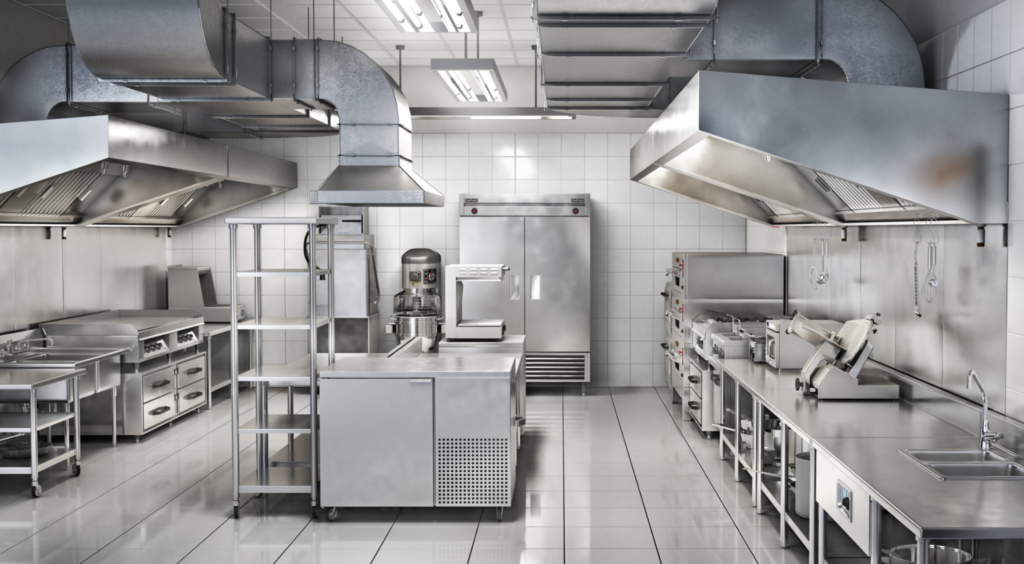
When I refer to a commercial kitchen, I mean a place intended for continuous usage that is used for professional food preparation and processing. With the help of these kitchens, you can consistently serve huge numbers of customers by coordinating the cooking, storage, washing, and dispatch procedures.
There are three main ways that they are different from home kitchens:
- Designed to produce in large quantities and consistently
- built with food safety and inspection preparedness in mind.
- equipped with heavy-duty industrial machinery
This implies that every space, procedure, and piece of machinery must promote compliance, hygiene, and flow. A planning error might subsequently cost you money, time, or legal issues.
How Regulations Shape Professional Kitchens Worldwide?
One thing I always make clear is that local food safety regulations, which differ by nation, apply to professional kitchens. But the goal is always the same: to safeguard public health.
Regulations in various locations typically concentrate on:
- Food safety and cleanliness
- Standards for equipment
- Fire safety and ventilation
- Management of waste
- Employee training and hygiene
Designing a kitchen that is inspection-ready from the start is made easier when you comprehend these frameworks.
Commercial Kitchen Regulations in India
The Food Safety and Standards Authority of India oversees food enterprises in India in accordance with the Food Safety and Standards Act, 2006.
Depending on your turnover and scale, you must have an FSSAI registration or license if you run any kind of food preparation facility. The licensing procedure assesses:
- Workflow and layout of the kitchen
- Drainage and surfaces that can be cleaned
- Sufficient ventilation
- Methods for storing food
- Records such as Food Safety Management Systems
Additionally, trade permits and shop and establishment registration are mandated by local municipal authorities. When heat-intensive equipment is employed, fire safety approvals are required. Inspections and renewals are used to enforce these rules, making compliance an ongoing procedure as opposed to a one-time requirement.
Commercial Kitchen Regulations in the United States
State and local health agencies in the US oversee food safety under the FDA Food Code.
Professional kitchens have to abide by:
- Permits for zoning and health
- Requirements for food handler certification
- Rules for temperature control and storage
- Use of NSF-certified equipment
- Planned medical examinations
The emphasis is still on preserving hygienic paperwork, preventing contamination, and guaranteeing traceability, even if each state may have different regulations.
Commercial Kitchen Regulations in the United Kingdom
The Food Standards Agency oversees food enterprises in the United Kingdom. Before starting operations, each facility that prepares food must register with the local municipality.
Important legal requirements consist of:
- Critical Control and Hazard Analysis Point-based systems
- Frequent inspections of food hygiene
- Employee education on food safety
- Controlling pests and disposing of garbage properly
- Areas for raw and prepared food should be clearly separated.
Inspection ratings are made public, which has a direct effect on consumer confidence and brand image.
Kitchen Design Principles That Matter
I always advise designing kitchens with workflow efficiency and sanitary control in mind, regardless of location.
The best layouts:
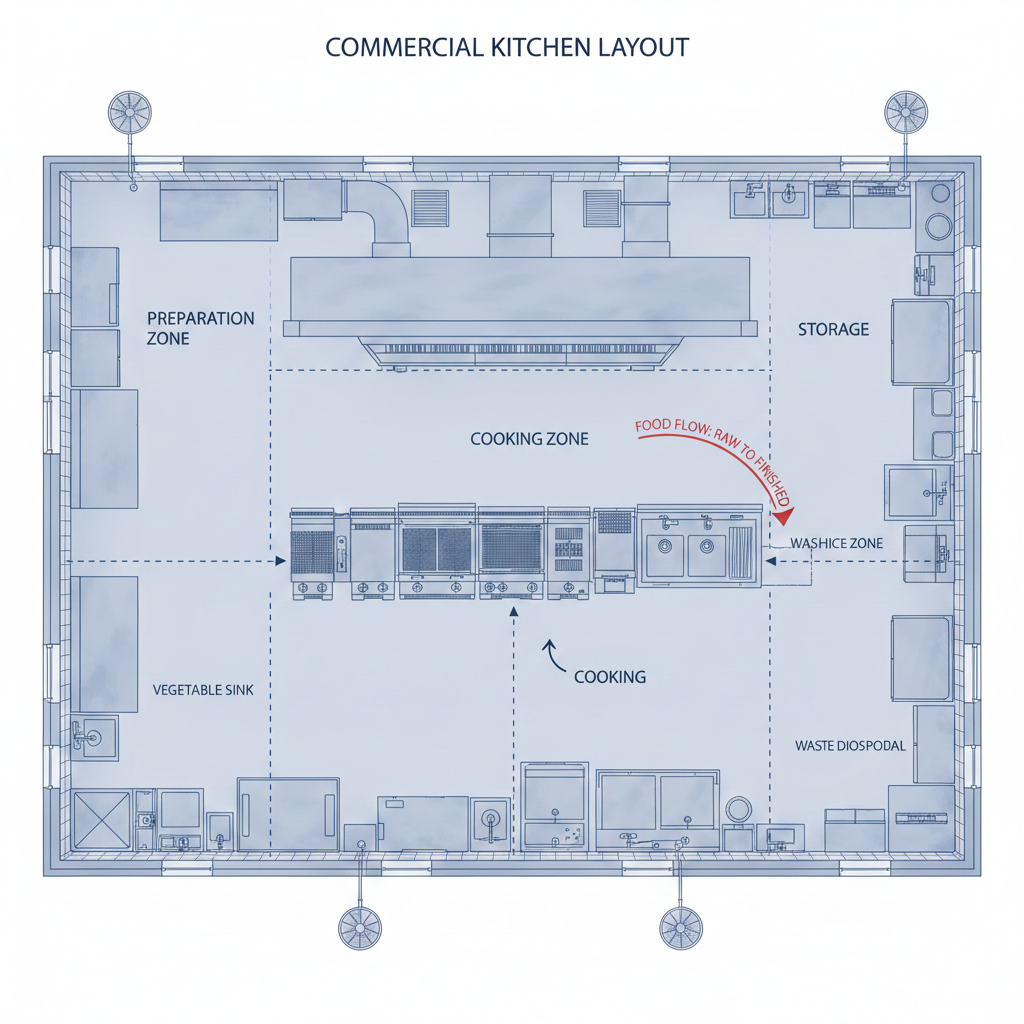
- distinct areas for storage, cooking, cleaning, and preparation
- Observe a sensible food flow from raw to final product.
- Use materials that are easy to clean and non-porous.
- Add enough airflow and exhaust systems.
Cross-contamination concerns and operational slowdowns are frequently caused by poor layout choices, particularly during peak hours.
Essential Equipment You Must Budget For
The equipment list that allows for large-scale food production is now the focal point of your investment. This is arranged by process zone, which aids in the planning of both layout and buying.
Preparation Zone
● Stainless steel work tables
● Slicers and cutters for vegetables
● Kneaders and mixers for dough
● Strong food processors and grinders
Compared to doing it by hand, these instruments make preparation quicker and safer.
Cooking Zone
● Burners and ranges (multi-burner units)
● Convection or deck ovens
● Tandoors and grills
● Deep-fryers
These devices need to be of industrial quality and able to be used continuously.
Cold Storage
● Freezers and refrigerators
● Cold rooms that are walk-in (for larger businesses)
For food safety and compliance, proper temperature regulation is essential.
- Pre-rinse washers in three sinks
- Washing machines
- Stations for handwashing
These lessen cross-contamination and assist adherence to hygienic standards.
Fire safety and ventilation
- Ducting and exhaust hoods
- Fire suppression systems
- Passing regulatory inspections is also aided by adequate ventilation.
For longevity and hygienic reasons, the majority of experts advise using stainless steel grade 304.
Best Practices for Safety, Hygiene, and Compliance
Operational discipline is more than just having the appropriate equipment and permits. Food Safety Management Plans (FSMS) based on HACCP concepts are also necessary.
- Documented SOPs for handling, storage, and cleaning.
- Staff members receive regular training on contamination concerns and personal hygiene.
- Temperature logs, pest control records, and daily cleaning checklists.
These procedures not only satisfy inspectors but also increase customer confidence and food safety.
Common Mistakes New Operators Make
Having worked with numerous startups, I can identify the following common pitfalls:
- Beginning without the necessary licenses, which results in shutdowns and inspections
- Purchasing too much equipment that is not compatible with workflow
- Disregarding the requirement for ventilation
- Not recording hygiene procedures
Time, money, and worry can be saved by avoiding these early.
Frequently Asked Questions
A professional setup is created for scalability, safety, and regulatory compliance, whereas a home kitchen is made for individual use.
Indeed. The majority of nations demand license or registration prior to the start of food service.
There is no set size, but there must be enough room for hygienic areas, storage, and safe workflow.
You can, but anticipating scalability from the outset lowers the cost of future redesign.
Indeed. Hygiene and safety concepts are universal, notwithstanding differences in certifications and safety requirements.
Knowing how professional kitchens operate in various regulatory contexts enables you to make more informed choices early on. A well-thought-out arrangement increases productivity, safeguards clients, and fosters long-term expansion.
It is imperative that you devote time to learning about kitchen design, equipment, and compliance if you are establishing a food business. It is the cornerstone of operations that are sustainable.