
Table of Contents
- Why the Execution Model Matters More Than Ever
- What I Mean by a Turnkey Commercial Kitchen Partner
- Benefit One: Single Point of Accountability
- Benefit Two: Better Coordination Across Systems
- Benefit Three: Faster and More Predictable Timelines
- Benefit Four: Lower Risk of Cost Overruns
- Benefit Five: Built-In Compliance and Safety Planning
- Benefit Six: Operational Readiness at Handover
- When a Turnkey Partner Makes the Most Sense
- Frequently Asked Questions
- Final Thoughts and Decision Takeaways
Why the Execution Model Matters More Than Ever
When planning a commercial kitchen, many people focus on equipment and design. However, the way the project is executed is just as important.
A commercial kitchen involves multiple systems: layout, equipment, utilities, ventilation, safety, compliance, and workflow. If these are handled separately, gaps can arise, causing cost overruns, redesigns, and delays.
This is when it becomes crucial to comprehend the benefits of turnkey commercial kitchens, particularly during the project’s decision-making phase.
What I Mean by a Turnkey Commercial Kitchen Partner
From planning to commissioning and handover, a turnkey commercial kitchen partner handles every step of the process.
Rather than managing several vendors, you collaborate with a single partner who shares:
- Planning for design and layout
- Choosing and installing equipment
- Fire safety, ventilation, and utilities
- Requirements for compliance and hygiene
- Testing, commissioning, and assistance
What sets this approach apart is accountability. One partner takes ownership of the entire process, ensuring everything fits together.
Benefit One: Single Point of Accountability
Clarity of duty is one of the main benefits of a turnkey business.
When something goes wrong in fragmented execution, vendors are frequently held accountable. Installation is the fault of the design. Utilities are blamed for the installation. Problems with compliance appear late.
Accompanying a turnkey partner:
- The scope is well-defined.
- Central decision-making is used.
- Problems are fixed without assigning blame.
This clear responsibility often prevents delays and disputes.
Benefit Two: Better Coordination Across Systems
Commercial kitchens rely on the cooperation of several systems.
Ventilation is impacted by equipment placement. Fire safety is impacted by ventilation. Utilities impact layout. All of them are impacted by compliance.
These systems are coordinated from the beginning in a turnkey arrangement. Compared to traditional models, this integrated planning reduces clashes and rework during installation.
This coordination improves quality while keeping things simple for the operator, making it a key advantage of turnkey commercial kitchens.
Benefit Three: Faster and More Predictable Timelines
In kitchen projects, time is of the essence. Revenue is lost when openings are delayed.
Timeliness is improved by turnkey execution:
- Cutting down on vendor handoffs
- completing designs before purchasing
- Matching the order of installations
- Reducing last-minute modifications
Projects with a clear turnkey structure are easier to plan and track. Predictability is as valuable as speed.
Benefit Four: Lower Risk of Cost Overruns
Usually, late changes or inadequate coordination lead to cost overruns.
A turnkey partner aids in cost containment by:
- Early scope locking
- Finding conflicts in the design process instead of the installation
- Minimising duplication and rework
- Increasing the visibility of the budget
While turnkey solutions are sometimes seen as expensive, fragmented projects are actually more likely to experience uncontrolled cost overruns.
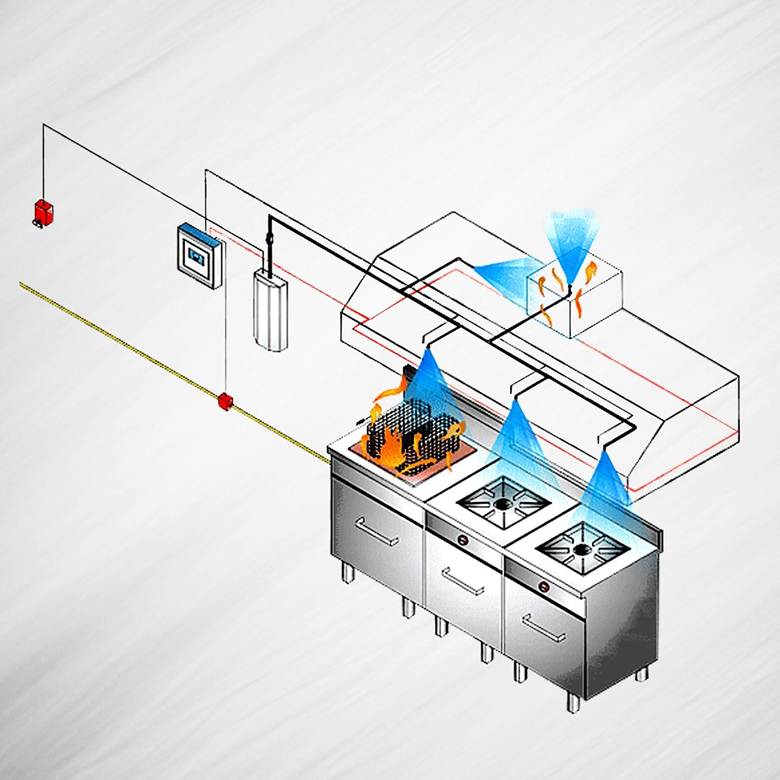
Benefit Five: Built-In Compliance and Safety Planning
One of the risks associated with new kitchen projects that is most often overlooked is compliance.
Standards for layout, ventilation, fire safety, and hygiene must all be in line. Compliance is incorporated into the design and implementation of a turnkey model rather than being added afterwards.
When compliance is integrated from the start, there are fewer operational issues after opening, and inspections go more smoothly than if compliance is added later.
Benefit Six: Operational Readiness at Handover
When the installation is finished, the kitchen is not finished. When it functions in actual circumstances, it is finished.
Typical turnkey partners are:
- Testing of equipment under load
- Performance evaluations of ventilation
- Validation of workflow
- Support for commissioning and handover
This ensures the kitchen is both attractive and fully functional, reducing early problems and dissatisfaction among staff.
When a Turnkey Partner Makes the Most Sense
A turnkey strategy is particularly beneficial when:
- It’s your first time starting a kitchen.
- There are strict deadlines.
- Several systems need to cooperate.
- The standards for compliance are intricate.
- Instead of trying and failing, you want predictable results.
Often, the benefits of a turnkey commercial kitchen are greater than the perceived flexibility of managing every detail yourself.
Frequently Asked Questions
Are compact kitchens a good fit for a turnkey partner?
Indeed. Because of their limited area, small kitchens really benefit from coordinated planning.
Does turnkey imply giving up operator control?
No, you still have the power to make decisions, but execution is handled centrally.
Can turnkey projects be completed more quickly than traditional models?
Because cooperation is streamlined, the answer is usually yes.
Does after-sales assistance come with turnkey?
It ought to. A component of truly turnkey execution is long-term assistance.
Is it possible to customize readymade kitchens?
Of course. Reputable turnkey partners plan their operations around yours.
Final Thoughts and Decision Takeaways
The implementation of a commercial kitchen is a strategic decision rather than a mere purchasing decision.
Accountability, coordination, and predictability are the true benefits of turnkey commercial kitchens. End-to-end process ownership by a single partner reduces risk and improves results.
When planning a project, look at both the execution approach and the costs involved. The right turnkey partner will provide a kitchen that works from day one, saves time, and protects your investment.
If you’re evaluating partners for your next project, our guide on how to choose a commercial kitchen contractor in India walks through the full 14-point checklist we use.