Table of Contents
- Why Understanding the Turnkey Process Matters
- What is the Turnkey Commercial Kitchen Process?
- Stage One: Requirement Mapping and Concept Finalisation
- Stage Two: Design, Layout, and Technical Coordination
- Stage Three: Equipment Finalisation and Procurement
- Stage Four: Site Readiness and Utility Preparation
- Stage Five: Installation and Integrated Execution
- Stage Six: Testing, Commissioning, and Handover
- How the Turnkey Process Reduces Risk and Delays
- Frequently Asked Questions
- Final Thoughts and Execution Takeaways
Why Understanding the Turnkey Process Matters
Many operators choose a turnkey model without understanding how the execution process works. They want accountability and clarity, as well as convenience.
When the turnkey process is unclear, projects can face confusion and delays. Staying organised helps keep everything on track.
Knowing how the turnkey kitchen process works helps you set expectations early and choose the right partners.
What is the Turnkey Commercial Kitchen Process?
From concept planning to operational handover, a single partner oversees the turnkey commercial kitchen process, an organized, end-to-end execution framework.
This procedure incorporates:
- Organising and creating
- Choosing and installing equipment
- Systems for utilities, ventilation, and safety
- Coordination of compliance
- Commissioning and testing
The key difference in a turnkey project is ownership. One partner is responsible for making sure all the parts of the kitchen work together.
Stage One: Requirement Mapping and Concept Finalisation
For example, a recent hospital kitchen renovation utilized a turnkey model that began with detailed requirement mapping, which enabled the project team to anticipate operational needs, avoid costly design changes later, and streamline approvals. This case demonstrates that successful turnkey projects are grounded in initial clarity regarding operational objectives and constraints.
At this point, I concentrate on comprehending:
- The model of business and services
- Complexity of the menu and volume of manufacturing
- Demand peaks and the rhythm of operations
- Plans and space limitations
This information influences every subsequent decision. One of the most frequent causes of turnkey project failure is skipping or hurrying through this phase.
Stage Two: Design, Layout, and Technical Coordination
The next step is converting requirements into a functional design.
This phase consists of
- Planning the workflow from receipt to dispatch
- Prep, cooking, cleaning, and waste zoning
- Development of layouts in accordance with cleanliness and safety
- Coordination with authorities, consultants, and architects
Good design is not just about looks; it’s about making sure everything works together smoothly.
Stage Three: Equipment Finalisation and Procurement
In a turnkey concept, operations, not catalogues, drive equipment selection.
At this point:
- Workflow and volume are taken into consideration when choosing equipment.
- The requirements are in line with ventilation and utilities.
- Timelines for procurement are set in stone.
Based on my experience, kitchens work best when equipment choices are made after workflow and layout have been confirmed, not before.
Stage Four: Site Readiness and Utility Preparation
The location needs to be prepared before installation starts.
This phase concentrates on:
- Preparedness for electrical loads
- Coordination of water and gas lines
- Slope and drainage inspections
- Shaft alignment and ventilation ducting
Getting the site ready is a key step. If this part is rushed or skipped, it can lead to mistakes, delays, or extra work.
Stage Five: Installation and Integrated Execution
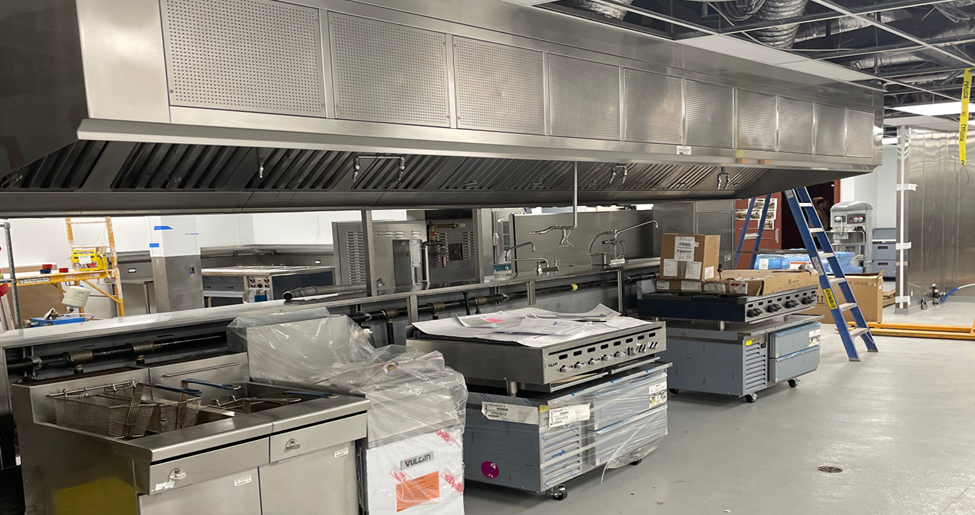
For instance, consider a scenario where installation is managed as an integrated process under a single provider, rather than being fragmented across multiple contractors. In such cases, the benefits of turnkey execution, such as streamlined communication, reduced scheduling conflicts, and consistent quality, become particularly evident.
Installation is managed as a single integrated effort rather than by several providers operating separately. Utilities, safety systems, ventilation, and equipment are placed in a predetermined order.
This collaboration keeps deadlines on track, minimizes conflicts, and enhances quality. Under a turnkey model, this step goes much more smoothly than fragmented execution.
Stage Six: Testing, Commissioning, and Handover
A kitchen isn’t truly finished until it works the way it should, not just when the installation is done.
Commissioning consists of:
- Testing machinery while it is loaded
- Checking the effectiveness of ventilation
- Examining emergency and safety systems
- Verifying access and workflow
The kitchen is only turned over as operationally ready following this. The turnkey commercial kitchen procedure is genuinely finished with this last step.
How the Turnkey Process Reduces Risk and Delays
Turnkey projects lower risk by making one team responsible for the whole job. This means less chance of mistakes, easier communication, and smoother delivery overall.
It:
- Removes gaps in vendor coordination
- minimises impromptu design modifications
- increases preparedness for compliance
- reduces the overall time needed for execution
Clear responsibility facilitates quicker decision-making and more rigorous implementation.
Frequently Asked Questions
Is the turnkey process suitable for all kitchen sizes?
Yes. The process scales from small kitchens to large production facilities.
Does turnkey mean less control for the operator?
No. Operators remain involved in approvals while execution coordination is handled centrally.
Is turnkey execution faster than traditional models?
In most cases, yes, due to reduced handoffs and rework.
Does the process include compliance support?
It should. Compliance integration is a core part of turnkey execution.
What happens after handover?
Good turnkey partners provide after-sales support and maintenance planning.
Final Thoughts and Execution Takeaways
Convenience is not the only factor in the turnkey commercial kitchen process. It has to do with accountability and organized execution.
When designed and installed correctly, operators can focus on their business while experts manage the technical details. The turnkey approach combines design, installation, compliance, and final checks into a single system.
Before initiating your next kitchen improvement, invest time in thoroughly understanding each stage of the turnkey process rather than relying solely on general assurances. By systematically applying the complete turnkey framework, you can make informed decisions, mitigate project risks, and achieve consistent, predictable outcomes.