Table of Contents
- Why Project Management Determines Kitchen Success
- What Commercial Kitchen Project Management Involves
- Defining Scope and Objectives Clearly
- Aligning Design, Equipment, and Utilities
- Managing Vendors, Timelines, and Sequencing
- Risk Identification and Mitigation Planning
- Budget Control and Cost Discipline
- Commissioning and Handover Management
- Frequently Asked Questions
- Final Thoughts and Authority Takeaways
Why Project Management Determines Kitchen Success
Poor equipment is not the primary cause of most commercial kitchen failures. A lack of coordination brings them on.
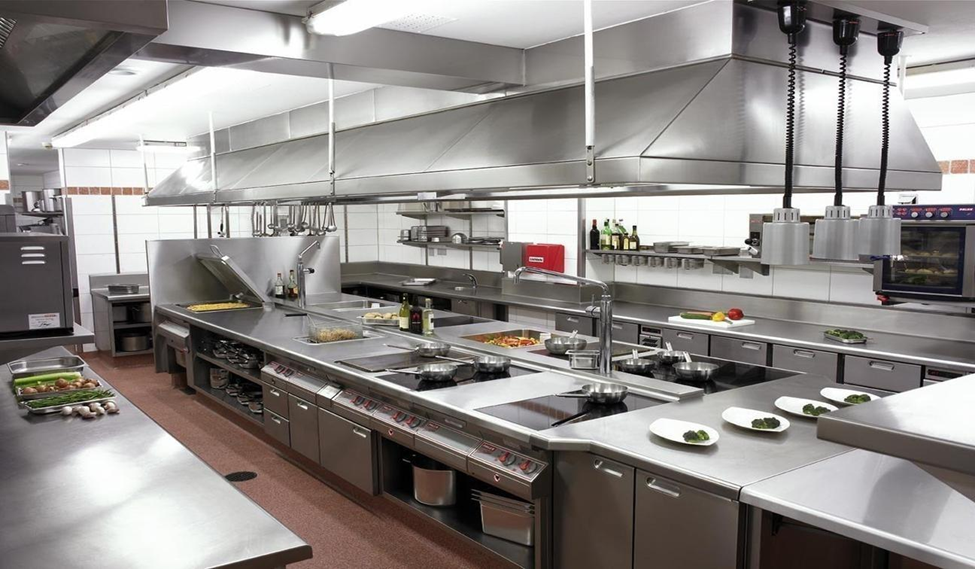
Design, engineering, utilities, ventilation, compliance, procurement, and installation all come together in a commercial kitchen. Strong individual components do not align without systematic control.
Based on my experience, a technical blueprint becomes a working kitchen through efficient project management for commercial kitchens. Timelines, finances, and operational preparedness are safeguarded.
What Commercial Kitchen Project Management Involves
The systematic planning, coordination, execution, and oversight of all tasks necessary to produce a fully functional kitchen is known as commercial kitchen project management.
Usually, it consists of:
- Define the scope and validate the requirements.
- Coordination of design and approvals
- Planning for the purchase of equipment
- Management of contractors and vendors
- Alignment of utilities and ventilation
- supervision of compliance
- Supervision of testing and commissioning
There is no parallel activity to project management. This structure connects every stage of execution.
Defining Scope and Objectives Clearly
Clarity is the first step in effective project management.
Before starting design or procurement, I concentrate on:
- Service structure and business model
- Volume of production and intricacy of the menu
- Scalability and space limitations
- Regulations
Changes happen in the middle of a project when the scope is unknown. Delays, cost overruns, and compromised results are caused by scope drift.
Having clear goals lowers friction downstream.
Aligning Design, Equipment, and Utilities
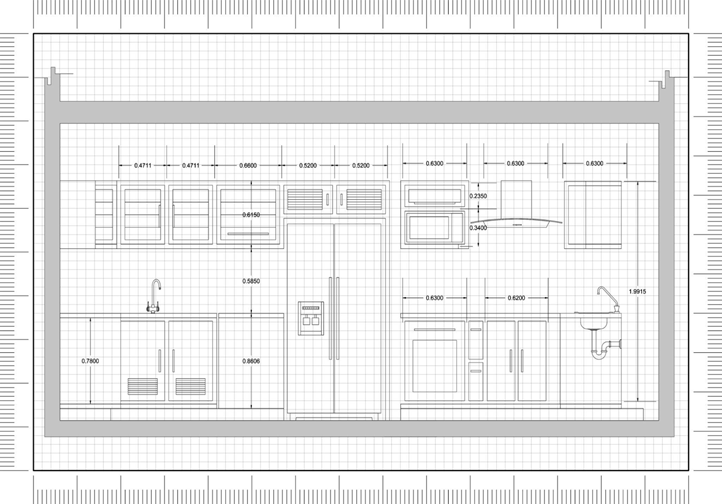
Alignment is one of the most important duties in project management for commercial kitchens.
Design needs to show:
- Actual dimensions of the equipment
- Capabilities of utilities
- Coverage of ventilation
- Standards for safety and cleanliness
Equipment has to be compatible:
- Availability of power
- Pressure of gas
- Infrastructure for drainage
Alignment in design avoids costly installation revisions, as shown in the coordinated layout planning above.
Managing Vendors, Timelines, and Sequencing
Several experts are needed for kitchen projects. The same physical location is used by utility teams, ventilation contractors, equipment vendors, and designers.
Project management guarantees:
- The work is arranged rationally.
- On-site, vendors do not clash.
- Deliveries match preparedness
- Installation adheres to predetermined milestones.
Installation becomes reactive rather than structured in the absence of sequencing discipline.
Risk Identification and Mitigation Planning
There is danger in every project. Effective commercial kitchen project management foresees it.
Typical dangers consist of:
- Delays in equipment lead times
- Gaps in site readiness
- Mismatches in utility capacity
- Revisions to compliance
- Late scope modifications
Effective management anticipates possible bottlenecks and develops mitigation strategies rather than responding to issues after they arise.
Proactive risk management, in my experience, reduces delays more efficiently than hurried execution.
Budget Control and Cost Discipline
Single high expenses rarely result in cost overruns. They build up through little, unforeseen changes.
In commercial kitchen project management, budget discipline entails:
- Before purchase, the scope is locked.
- Formally monitoring change requests.
- Matching authorised drawings with procurement
- Steer clear of reactive changes.
Financial unpredictability is reduced, and margins are safeguarded through systematic cost management.
Commissioning and Handover Management
Installation is not the end of project management.
Supervision of commissioning and handover is necessary to guarantee:
- Under load, equipment functions.
- Ventilation operates as intended.
- Safety systems react as intended.
- Workflow operates in actual circumstances.
The project as a whole is validated at this point. Operations are disrupted by unresolved issues in kitchens that open without proper control.
Frequently Asked Questions
Do minor kitchen projects require project management?
Indeed. Tighter restrictions in smaller kitchens necessitate even greater collaboration.
Is it possible for operators to oversee projects on their own?
They can, but it requires significant coordination and technological expertise.
Does project management come with turnkey execution?
Indeed. Project management and execution are combined in a turnkey paradigm.
Which factor contributes most to project delays?
Unclear scope and inadequate vendor coordination.
At what point should project management start?
Before finalising the design, during the concept phase.
Final Thoughts and Authority Takeaways
Commercial kitchen projects are inherently complex. Success depends less on individual components and more on how they are managed together.
Effective commercial kitchen project management creates clarity, reduces risk, and ensures that design, procurement, installation, and commissioning align toward one outcome.
If you are planning a commercial kitchen, do not treat project management as an administrative layer. Treat it as the discipline that protects your investment and ensures operational readiness.
That discipline starts with the contract itself; our guide on commercial kitchen scope of work covers exactly what should be documented before work begins.