
Table of Contents
- Why Commissioning Is Often Misunderstood
- What is Commercial Kitchen Commissioning?
- How Commissioning Differs from Installation
- Core Elements Checked During Kitchen Commissioning
- Step-by-Step Commercial Kitchen Commissioning Process
- Common Issues Identified During Commissioning
- Why Commissioning Is Critical in Turnkey Execution
- Frequently Asked Questions
- Abstract-Style Keywords
- Final Thoughts and Specialist Takeaways
Why Commissioning Is Often Misunderstood
A lot of people think a kitchen is ready once the equipment is set up and plugged in, but this mistake often leads to problems right after opening.
Commissioning tests if the kitchen can handle real cooking. Skipping it means you might only find hidden problems when it’s too late, which can be expensive and slow to fix.
Understanding commissioning helps kitchen owners open smoothly and run things without surprises.
What is Commercial Kitchen Commissioning?
Commercial kitchen commissioning means carefully checking if everything in the kitchen works the way it should after all the equipment is installed.
It confirms that:
- The device operates safely under load.
- Utilities assist real-world usage scenarios.
- Ventilation regulates heat, smoke, and grease.
- Safety systems respond as they should.
- Workflow is operational during service simulation.
Commissioning is not just paperwork. It’s making sure things work in practice, not just on paper.
How Commissioning Differs from Installation
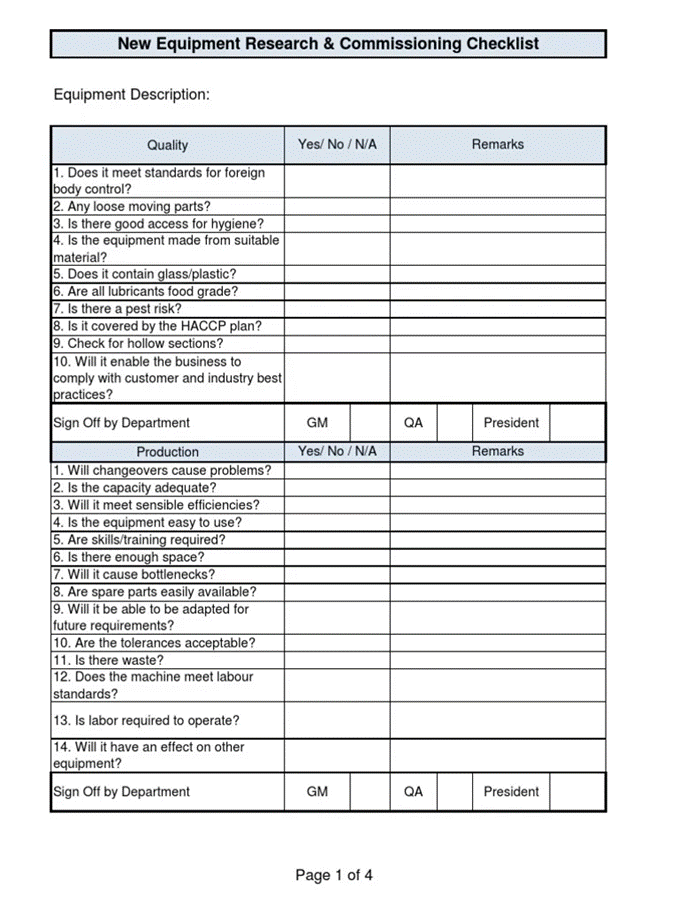
Commissioning is about seeing how things work in real life, not just during setup.
Installation is about putting things in place and connecting them. Commissioning checks if everything works properly.
During the course of installation:
- The apparatus is fixed and positioned.
- The utilities are interconnected.
- Systems are examined visually.
During the course of commissioning:
- Continuous operation of the equipment
- When cooking loads are present, ventilation is assessed.
- Safety mechanisms are activated and confirmed.
- Operational flow is assessed.
Experience has shown that many kitchens that neglect appropriate commissioning only find problems when service is at its highest. Installation and commissioning must therefore be handled as distinct phases.
Core Elements Checked During Kitchen Commissioning
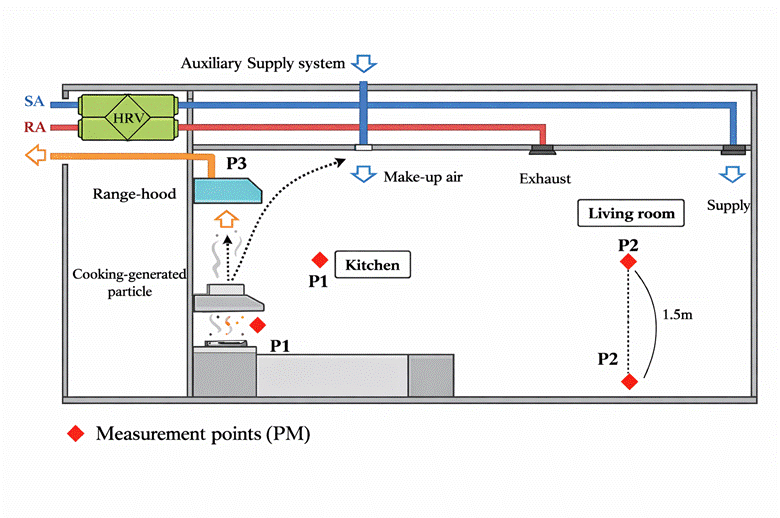
“These ventilation checks demonstrate how airflow, heat removal, and capture efficiency are verified during commissioning.”
Commissioning looks at the kitchen as a whole system, not just its individual parts.
Important components consist of:
Performance of the equipment
To ensure stability and output uniformity, every piece of equipment is tested under various operating conditions and loads.
Air balance and ventilation
Hood systems are inspected for make-up air balance, exhaust performance, and capture efficiency.
Safety systems and utilities
Emergency systems, drainage flow, electrical safeguards, and gas shut-offs are all checked.
Access and workflow
During simulated operations, movement routes, clearances, and service access are assessed.
These checks often catch problems that a simple look at the setup might miss.
Step-by-Step Commercial Kitchen Commissioning Process
Although the scope varies, a typical commissioning procedure has a defined flow.
Preliminary system examinations
Before completing the operation, check all connections, controls, and safety equipment.
Testing for operational load
Simulating actual service conditions by operating equipment concurrently.
Testing the efficacy of ventilation
Verifying comfort levels, heat removal, and smoke capture.
Verification of safety and emergencies
Testing shut-off systems, alarms, and fire suppression.
Resolving issues and retesting
Fix any gaps found and confirm the fixes.
This step-by-step process helps make sure the kitchen is ready to use.
Common Issues Identified During Commissioning
During commissioning, you often find problems that were hard to spot before.
Here are some common issues that show up:
- Not enough ventilation when the kitchen is busy
- Power goes out when too many things are running
- Gas pressure drops when lots of equipment is on at once
- Crowded work areas that slow down cooking or serving
- Some spots are hard to reach for cleaning or repairs
Spotting these problems early protects your kitchen and your reputation.
Why Commissioning Is Critical in Turnkey Execution
In a turnkey execution, accountability is made clear during commissioning.
Problems that are encountered during commissioning are resolved without disagreements of scope because one partner is responsible for execution from start to finish. This guarantees the kitchen operates as promised and reduces delays.
Turnkey execution views commissioning as a scheduled milestone rather than a last-minute patch, unlike fragmented projects.
That’s why doing commissioning properly shows your project is well managed and ready for real use.
Frequently Asked Questions
Are commercial kitchens required to be commissioned?
Although it might not always be required, it is highly advised for operational dependability.
What is the duration of commissioning?
Depending on the size and intricacy of the kitchen, it usually takes a few days to a few weeks.
Can we postpone the commissioning opening?
Delays caused by post-opening failures are avoided through proper commissioning.
Who ought to carry out commissioning?
The execution partner should be in charge, with assistance from experts as needed.
Does staff training come with commissioning?
Although it can assist with training, system validation is its main objective.
Final Thoughts and Specialist Takeaways
Commissioning shows your kitchen can handle real work, not just look good on paper.
When you take commissioning seriously, the kitchen works the way it should and the staff can focus on cooking instead of fixing problems. Rushing or skipping it usually leads to issues.
Don’t treat commissioning as just a formality; it’s a key step for safety and a smooth launch in any kitchen project.