Table of Contents
• Why Understanding Equipment Matters
• What Defines Professional Kitchen Equipment
• Core Cooking Equipment Categories
• Refrigeration and Cold Storage Systems
• Preparation and Support Equipment
• Ventilation and Safety Systems
• How to Choose Equipment Strategically
• Frequently Asked Questions
• Final Thoughts and Practical Takeaways
Why Understanding Equipment Matters
It’s simple to concentrate on brands, size, or appearance when you’re first setting up a professional kitchen. Based on my observations, errors typically occur when equipment is selected without consideration for menu, workflow, and utility capacity.
Infrastructure that is only cosmetic is not equipment. It establishes compliance, uniformity of output, speed, and safety. Understanding how the various categories work together helps you avoid later, expensive modifications.
Clarity regarding the operating goals of each equipment group is the first step in effective planning.
What Defines Professional Kitchen Equipment
Professional-grade equipment is designed to withstand constant, demanding use.
Commercial appliances, as opposed to home appliances, are made for:
- Increased emission of heat
- Constant cycles of operation
- Quicker recuperation
- The durability of stainless steel
- Simple access to maintenance and sanitary facilities
Food-contact surfaces in India must meet FSSAI standards for cleanliness, smoothness, and corrosion resistance. The equipment must support hygienic handling procedures.
Hygiene compliance and durability are key. Equipment becomes a liability if it cannot sustain everyday loads.
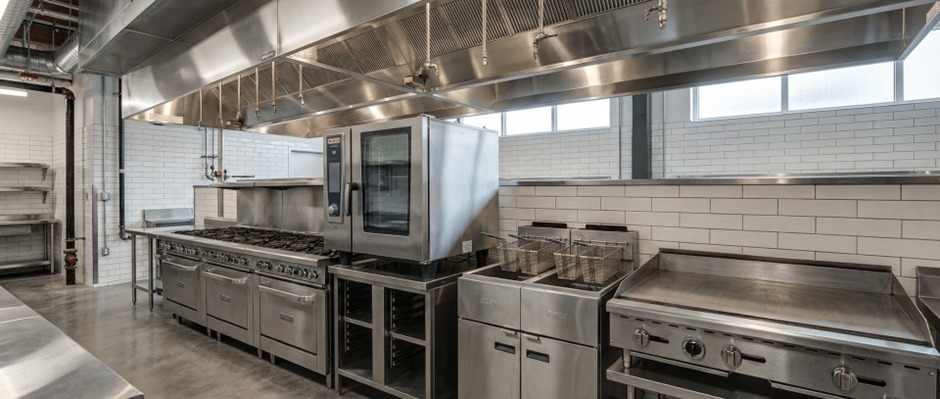
Core Cooking Equipment Categories
Ventilation equipment serves a critical role within the core cooking equipment category by ensuring comfort, maintaining safety, and fulfilling legal compliance requirements.
An entire system consists of:
Hoods for exhausts
Using ducting
Makeup air conditioners
Filtration for grease
Integrating fire suppression
Kitchen exhaust systems must comply with fire safety regulations outlined in the National Building Code. LPG systems must comply with PESO safety regulations.
Otherwise, performance is affected, fire danger is increased, and heat stress is exacerbated by inadequate ventilation. The choice of equipment needs to be planned with safety integration in mind.
Refrigeration and Cold Storage Systems
Refrigeration extends food’s shelf life and maintains inventory integrity.
Typical systems include:
Refrigerators with reach-through
Cold rooms that are reachable on foot
Freezers
Blast chillers
Temperature consistency is crucial. Inadequate storage capacity could lead to temperature changes and a risk to food safety.
According to FSSAI hygiene rules, raw and ready-to-eat food must be kept apart in proper cold storage. I always adjust fridge sizing to product turnover and supply frequency.
Cold storage involves more than just capacity. It has to do with control and stability.
Preparation and Support Equipment
Preparation zones boost dependability and productivity.
Crucial components include:
Stainless steel tables for work
Food processors and cutters
Dough mixers
Storage shelving
Ingredient bins
The quality of the fabrication is crucial here. Stainless steel surfaces should be structurally stable, easily cleaned, and have an appropriate drainage slope.
Inadequate prep spaces slow down service and increase the chance of cross-contamination. When washing, chopping, and cooking are properly zoned, hygiene standards are maintained.
Ventilation and Safety Systems
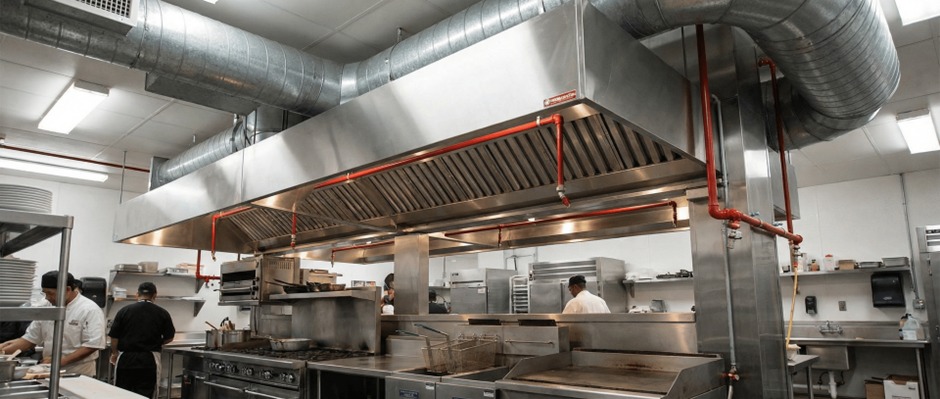
Ventilation maintains comfort, safety, and compliance with the law.
A complete system includes:
Exhaust hoods
The ducting
Air conditioners for makeup
Grease filtering
Combining fire suppression
The National Building Code specifies fire safety requirements for kitchen exhaust systems. LPG installations must comply with PESO safety rules.
Inadequate ventilation exacerbates heat stress, reduces performance, and increases the risk of fire. Safety integration should always be considered when choosing equipment.
How to Choose Equipment Strategically
When choosing an equipment, my advice would be to enquire before deciding on equipment:
- What is the maximum load at the same time?
- Are utilities adequate and authorised?
- Is there local after-sales support available?
- Does the equipment comply with fire and hygiene standards?
- Is there potential for growth in the future?
Those new to commercial kitchens often underestimate essential capacity or overinvest in expensive gear. Focusing on functionality, rather than just brand, becomes easier with a structured understanding of equipment types.
Equipment needs to align with long-term scalability, infrastructure capacity, menu logic, and compliance standards.
Frequently Asked Questions
Are home appliances suitable for commercial use?
No. They are not designed for heavy-duty, continuous use.
To what extent does ventilation matter?
Safety and regulatory approval are directly affected.
Should utilities be confirmed before equipment is finalised?
No. The first step must be utility validation.
Do the same categories apply to small kitchens?
Yes, in scaled arrangements, the same categories normally apply.
Who ought to make the selection decisions?
A technical expert with extensive execution experience typically makes selection decisions.
Final Thoughts and Practical Takeaways
To truly grasp commercial kitchen equipment basics, it’s important to understand how each piece contributes to daily routines and to use this insight for smarter choices. Regularly reviewing whether equipment fits both present and future needs, keeping up with maintenance, and ensuring purchases match safety and compliance requirements can all help kitchens run efficiently and avoid unnecessary costs.
Ventilation, prep areas, refrigeration, and cooking systems must all work together. Performance becomes predictable when equipment is aligned with utilities, volume, and compliance.
By taking a deliberate approach to equipment selection, you can lower the risk of redesign, maintain regulatory alignment, and create a kitchen that runs smoothly from day one.