Table of Contents
- Why Equipment Safety Is a Foundational Requirement
- What I Mean by Commercial Kitchen Equipment Safety
- Installation and Clearance Safety Standards
- Gas and Electrical Safety Considerations
- Ventilation and Kitchen Hood System Safety
- Fire Suppression and Emergency Readiness
- Safe Equipment Operation and Staff Training
- Routine Safety Inspections and Preventive Controls
- Frequently Asked Questions
- Final Thoughts on Safety Authority
Why Equipment Safety Is a Foundational Requirement
Commercial kitchens are subjected to constant movement, intense pressure, and extreme heat. Equipment concurrently produces mechanical force, electrical load, steam, and flame.
Experience has shown that a single major error rarely leads to safety failures. They occur when minor safety measures are disregarded.
Commercial kitchen equipment safety must therefore be considered a design and operating priority rather than a pre-inspection checklist item.
What is Commercial Kitchen Equipment Safety?
The systematic process of ensuring that every appliance operates without endangering personnel, infrastructure, or compliance standards is what I mean by commercial kitchen equipment safety.
This comprises:
- Safe installation
- Compatibility of utilities
- Control of heat and ventilation
- Preparedness for fire suppression
- Discipline in operations
Preventing accidents is not the main aspect of safety. The goal is to establish dependable operating conditions in high-stress situations.
Installation and Clearance Safety Standards
The first line of defence is proper installation.
Important things to think about are:
- Sufficient distance between heat-generating devices
- Levelling and stable placement
- Shut-off valves that are accessible
- Appropriate distance for maintenance access
Heat accumulation and fire risk are increased by improper spacing. It has been observed that one of the most frequent safety lapses is the overcrowding of equipment.
Aesthetic decisions are not clearances. They serve as safety measures.
Gas and Electrical Safety Considerations
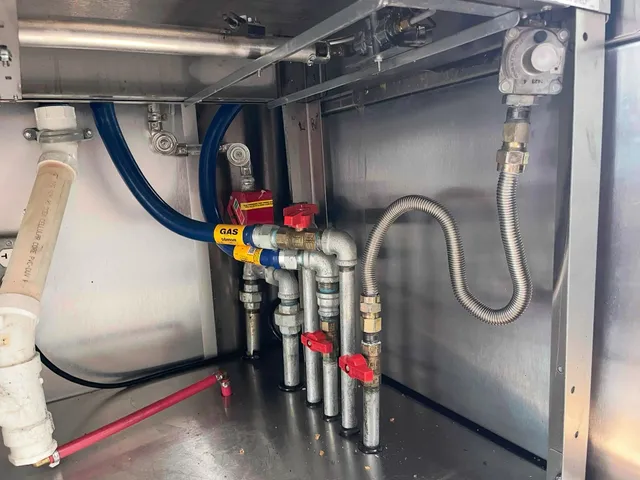
The majority of commercial kitchen appliances are powered by electricity and gas. Serious risks may result from improper handling of either.
Included in safety inspections should be:
- Testing for gas line leaks
- Electrical equipment should be properly grounded.
- Verification of load compatibility
- Alignment of circuit breaker capacity
- Safe cable routing
Installation shortcuts are frequently the cause of gas leaks and electrical overloads. These dangers are considerably decreased by preventive inspection and proper load planning.
Ventilation and Kitchen Hood System Safety
Equipment safety and ventilation are closely related.
Systems for kitchen hoods need to:
- Effectively capture vapours laden with grease.
- Take out any extra heat.
- Keep the airflow balanced.
- Avoid letting grease build up in the ducting.
Heat stress and fire risk are increased by inadequate ventilation. To maintain safe working conditions, ducting and hood filters must be cleaned regularly.
Appropriate ventilation performance is critical to the safety of commercial kitchen equipment. Without sufficient hood coverage, a high-performance cooking line is a recipe for disaster.
Fire Suppression and Emergency Readiness
Cooking equipment must be integrated with fire protection systems.
This comprises:
- Systems for automatically suppressing fires
- Extinguishers that are easily accessible
- Emergency shut-offs with clear markings
- Inspection of suppression nozzles regularly
Periodically testing fire suppression systems is necessary to ensure they are ready for activation. An untested suppression system poses a risk rather than a protection.
Safe Equipment Operation and Staff Training

When used improperly, even well-installed equipment might become dangerous.
Employees ought to receive instruction on:
- Procedures for safe starting and shutdown
- Limits for temperature regulation
- Procedures for cleaning
- Emergency reaction measures
Unambiguous standard operating procedures lessen mechanical strain and misuse. Equipment safety is changed from a static attribute to an active discipline through training.
Routine Safety Inspections and Preventive Controls
Consistent safety is ensured via ongoing inspection.
Frequent examinations must consist of:
- Examining the electrical wiring
- Checking the stability of the gas pressure
- Keeping an eye on ventilation effectiveness
- Analysing safety measures and interlocks
Before events happen, preventive procedures identify early warning indicators. Experience has shown that organised inspections greatly reduce delays linked to safety.
Frequently Asked Questions
Does equipment safety include ventilation?
Indeed. Heat control and fire danger are directly impacted by ventilation.
How frequently should safety inspections be carried out?
The degree of usage determines frequency, although regular checkups are crucial.
Does safety increase with preventive maintenance?
Indeed. Operational risk and mechanical failure are decreased by maintenance.
Does the law mandate kitchen hood systems?
Appropriate ventilation systems are required in most commercial settings.
Can modern equipment still lead to safety problems?
Indeed. Even in newly constructed kitchens, risks might arise from improper installation or operation.
Final Thoughts on Safety Authority
Safety is not an after-installation feature. Design, installation, operation, and maintenance all incorporate it.
Disciplined planning, proper ventilation integration, routine inspection, and skilled personnel are the foundations of true commercial kitchen equipment safety.
Consider safety from every angle when designing or evaluating a commercial kitchen. While equipment performance is important, safe performance is even more crucial.