ANSUL
ANSUL Commercial Kitchen Fire Suppression Systems; Authorised Dealer | Jacio Indicius
In commercial kitchen fire safety, there is a standard that regulators, insurers, and kitchen operators around the world recognise above all others. It is not a generic standard of adequate protection. It is the ANSUL standard; the benchmark established by decades of field-proven performance, independent third-party testing, and the documented protection of millions of commercial kitchens across every continent. When a fire starts in a commercial kitchen; and the data confirms that kitchen fires account for the leading category of structural fire damage in the food service industry globally; the difference between a contained incident and a catastrophic loss is often the presence or absence of an ANSUL fire suppression system.
ANSUL is part of Johnson Controls; one of the world’s leading building safety and technology companies; and carries the engineering depth, global certification programme, and continuous R&D investment of this industrial parent. But ANSUL’s identity as a specialist in fire suppression technology predates its current corporate structure by decades. The brand has dedicated its entire technical focus to the science of fire suppression; developing, testing, and refining the agents, delivery systems, detection mechanisms, and control hardware that constitute a comprehensive commercial kitchen fire suppression solution. The result is a product portfolio that is not only widely deployed but independently certified to the most rigorous fire safety standards that exist anywhere in the world.
The commercial kitchen fire hazard is uniquely severe among foodservice operational risks. Open flames, red-hot cooking surfaces, and heavily grease-laden ventilation environments combine to create fire conditions that spread faster, burn hotter, and resist conventional suppression efforts more effectively than almost any other commercial fire scenario. Restaurant kitchen fires are the leading cause of structural fire damage in the United States; a statistic that ANSUL cites not as background information but as the specific problem that its fire suppression technology exists to solve. A single kitchen fire can cost a restaurant over $25,000 in direct damage, not counting business interruption, regulatory shutdown periods, insurance premium increases, and reputational damage. These are not hypothetical costs. They are documented, recurring losses that ANSUL-equipped kitchens avoid every day.
Jacio Indicius serves as an authorised ANSUL dealer across India, the Middle East, Gulf countries, the USA, China, and Asia; providing complete fire suppression system supply, professional installation, commissioning, inspection, and ongoing maintenance support. In commercial kitchen environments where fire safety compliance is both a regulatory requirement and an operational imperative, Jacio Indicius ensures that your kitchen is protected by the world’s most trusted suppression technology, correctly installed and continuously maintained.
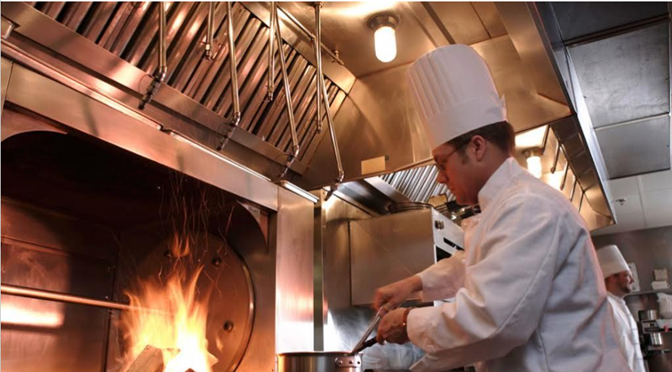
ANSUL; The Fire Safety Authority: Brand Profile
Corporate Parent | Johnson Controls; global leader in building safety, technology, and sustainability solutions |
Specialisation | Fire suppression, fire detection, and fire protection systems across commercial, industrial, and institutional applications |
Flagship Kitchen Product | ANSUL R-102 Restaurant Fire Suppression System; the most widely deployed commercial kitchen suppression system in the world |
Suppression Agent | ANSULEX Low pH Liquid Agent; proprietary wet chemical agent for rapid flame knockdown, surface cooling, and vapour-securing re-flash prevention |
Certifications | UL Listed (Standard UL-300) · ULC Listed (Canada) · NFPA 96 compliant · NFPA 17A compliant · NYC Department of Buildings approved · ABS (American Bureau of Shipping) |
Design Options | Appliance-Specific and Overlapping configurations; tailored protection for every kitchen layout |
Coverage | Hoods, ducts, plenums, filters, fryers, griddles, range tops, broilers, char-broilers, woks, and auxiliary grease extraction equipment |
Market Presence | ANSUL protects more commercial food service kitchens from fire than any other brand worldwide |
Jacio Indicius Status | Authorised dealer; genuine ANSUL products, certified installation, full compliance support and ongoing maintenance |
The ANSUL R-102 System; The Global Standard in Restaurant Fire Suppression
The ANSUL R-102 Restaurant Fire Suppression System is the most widely deployed commercial kitchen fire suppression system in the world; a distinction earned not through marketing activity but through demonstrated performance in the most demanding fire protection application in the foodservice industry. The R-102’s design reflects 30+ years of evolution in response to the changing fire hazard profile of commercial kitchens; particularly the increasing use of high-temperature cooking oils that have made commercial kitchen fires both more common and more difficult to suppress than previous generations of cooking technology produced.
At the heart of the R-102 system is ANSUL’s proprietary ANSULEX Low pH Liquid Agent. This is not a generic wet chemical agent. ANSULEX is the result of ANSUL’s specific R&D investment in developing a suppression agent precisely formulated for the cooking oil and grease fire chemistry that dominates commercial kitchen fire incidents. When ANSULEX contacts a burning grease surface, it performs three simultaneous suppression functions: rapid flame knockdown that extinguishes the visible fire, surface cooling that brings the cooking oil below its auto-ignition temperature, and a tough vapour-securing blanket that prevents re-flash; the re-ignition phenomenon that causes suppressed kitchen fires to reignite after initial suppression. These three simultaneous actions address the full fire lifecycle, not just the initial flame.
The R-102 system’s design flexibility is a critical operational advantage. Commercial kitchens are not standardised environments; they vary in size, configuration, equipment layout, ventilation architecture, and cooking technology in ways that make a one-size-fits-all suppression solution inadequate. ANSUL addresses this through two complementary design approaches: the Appliance-Specific configuration, where individual nozzles are precisely aimed at the specific hazard areas of each piece of cooking equipment, and the Overlapping configuration, where nozzles are arranged to provide a continuous ‘Fire-Free Zone’ of coverage across a group of appliances. Both configurations can be combined and mixed within a single installation to match the specific layout and risk profile of each kitchen.
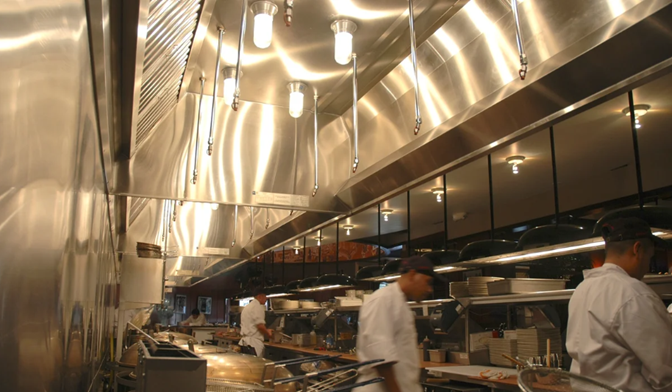
ANSULEX; The Chemistry of Commercial Kitchen Fire Suppression
Understanding why ANSULEX outperforms generic wet chemical agents requires understanding the specific chemistry of commercial kitchen fires. Modern commercial fryers operate at temperatures of 170°C to 200°C using vegetable oils and refined cooking fats with auto-ignition temperatures significantly higher than traditional animal-based cooking fats. When these oils ignite, they burn hotter and more energetically than older cooking fats, and they are more resistant to re-flash suppression because their surface temperatures take longer to drop below auto-ignition threshold.
ANSULEX was formulated specifically for this fire chemistry. Its low pH formulation creates a chemical reaction with burning cooking oils; saponification; that produces a soapy foam layer on the oil surface, cutting off oxygen supply and sealing the oil against re-ignition. This saponification reaction is faster and more durable than the physical smothering action of generic wet chemical agents, providing the vapour-securing blanket that prevents re-flash even as the suppressed oil begins to cool. The agent is also designated as equipment-friendly; its low pH minimises damage to the cooking equipment it contacts during suppression, reducing the repair and replacement costs associated with suppression events.
The PIRANHA System; Dual-Agent Suppression for Maximum Performance
For commercial kitchens with the highest-risk cooking equipment profiles; deep fat fryers operating at high temperatures with large oil volumes, char-broilers with heavy grease accumulations, or cooking operations at scale; ANSUL’s PIRANHA Restaurant Fire Suppression System provides a dual-agent solution that combines wet chemical suppression with water cooling. The PIRANHA system employs the fast flame knockdown and securing power of wet chemical and the fast cool-down capability of water in a single coordinated suppression event, providing a level of fire control that single-agent systems cannot match for the most demanding commercial kitchen applications.
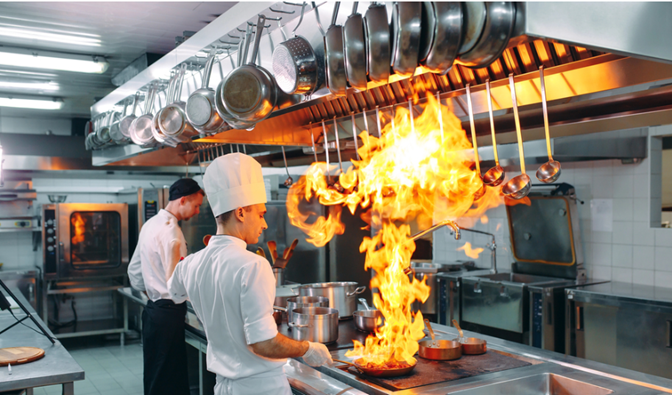
ANSUL Product Portfolio; Complete Commercial Kitchen Fire Safety Through Jacio Indicius
ANSUL's commercial kitchen fire safety product range addresses every aspect of the protection requirement; from primary suppression systems through detection components, control hardware, portable extinguishers, and specialised systems for mobile and non-traditional cooking environments.
Equipment Category | What It Delivers in Your Kitchen | Best Suited For |
R-102 Restaurant Fire Suppression System | The world’s most deployed commercial kitchen suppression system. ANSULEX Low pH agent for triple-action suppression (flame knockdown + surface cooling + vapour-securing re-flash prevention). Appliance-specific and overlapping design options. UL 300, ULC, NFPA 96, NFPA 17A compliant. Available in multiple agent cylinder sizes (BFR-5, BFR-10, BFR-15, BFR-20). | All commercial kitchens; restaurants, hotels, fast food, catering, institutions, food trucks, stadiums |
PIRANHA Dual-Agent Suppression System | Advanced dual-agent system combining wet chemical flame knockdown/securing with water-based rapid surface cooling. Engineered for the highest-risk commercial kitchen environments. Maximum fire control performance for high-temperature, high-oil-volume cooking applications. | High-risk commercial kitchens, large fryer operations, industrial catering |
Stainless Steel Discharge Nozzles | Precision-engineered discharge nozzles in five model types, each with colour-coded identification bands for visual identification even in difficult installation locations. Model-number stamped for specification compliance verification. | Integral components of R-102 and PIRANHA installation systems |
ANSUL Detection Components; Fusible Links & Thermal Detectors | Heat-activated detection components that trigger system discharge automatically when a defined temperature threshold is exceeded. Multiple sensitivity ratings for different cooking zone temperature profiles. | Integrated into all R-102 and PIRANHA system installations |
Systems Releasing Module & Control Hardware | Mechanical and pneumatic releasing hardware that connects detection input (fusible links, remote pull station) to agent discharge output. Buckeye Shielded Cable compatibility reduces installation time by up to 50%. | Integral to complete suppression system installation |
Portable Kitchen Fire Extinguishers | ANSUL portable extinguishers designed for commercial kitchen use; Class K wet chemical extinguishers for cooking oil and grease fires, plus ABC dry chemical and CO2 options for adjacent fire classes. | Commercial kitchens, restaurant front-of-house, food trucks, institutional kitchens |
INERGEN Clean Agent Suppression System | Clean agent suppression for sensitive equipment areas; electrical rooms, data systems, and specialty equipment where water or wet chemical damage would be unacceptable. Uses inert gas mixture that suppresses fire without damaging sensitive equipment. | Kitchen server rooms, POS systems, electronic equipment areas adjacent to commercial kitchens |
Inspection & Testing Equipment | ANSUL-certified inspection tools and testing components for scheduled maintenance verification of system pressure, agent integrity, nozzle coverage, and detection component function. | Annual inspection and compliance maintenance of all installed systems |
Why Every Commercial Kitchen Needs ANSUL; The Fire Safety Imperative
Regulatory Compliance; NFPA 96 and UL 300 as the Legal Baseline
In the United States, NFPA 96 (Standard for the Installation of Equipment for the Removal of Smoke and Grease-Laden Vapors from Commercial Cooking Equipment) mandates fire suppression systems for commercial kitchen ventilation equipment. UL 300 establishes the fire test standard that suppression systems must meet for commercial kitchen applications. ANSUL’s R-102 system carries UL 300 listing; the independent verification that it meets the most rigorous fire performance standard applicable to this use case. Equivalent regulatory standards exist in Middle Eastern, Gulf, Indian, and Asian markets; and ANSUL’s global certification programme ensures that its systems meet compliance requirements across all the markets that Jacio Indicius serves.
For operators in these markets, installing a non-certified or inadequately specified suppression system does not simply fail to provide fire protection; it creates regulatory liability, insurance compliance gaps, and potential operational licence risks that can be more costly than the investment in proper ANSUL protection. Jacio Indicius’s authorised dealer status ensures that every ANSUL system we supply meets the certification requirements applicable to your specific market and jurisdiction.
Insurance, Risk Management & Operational Continuity
Commercial kitchen fire incidents are among the most financially damaging events a foodservice operation can experience. The direct damage cost of a restaurant kitchen fire averages over $25,000 in the United States; but this figure represents only the most visible cost. Business interruption during repair and inspection, increased insurance premiums following a fire incident, regulatory inspection and re-certification costs, and reputational damage among customers who learn of a kitchen fire contribute to a total financial impact that frequently exceeds the direct damage cost by a significant multiple.
Insurance underwriters for commercial kitchen operations explicitly evaluate fire suppression system specification as a premium-setting factor. Operations with UL 300-listed ANSUL systems; correctly installed and regularly maintained; qualify for lower insurance premiums than operations with inadequate or uncertified suppression systems. Over the operational life of a commercial kitchen, the insurance premium savings from proper ANSUL installation frequently offset a substantial portion of the installation investment; making ANSUL not merely a safety expenditure but a financially rational investment in risk management.
The Commercial Kitchen Fire Risk Profile; Why Standard Protection is Inadequate
Commercial kitchen fires are categorically different from office fires, retail fires, or residential fires in the speed of their development and the difficulty of their suppression. The combination of open flames or hot cooking surfaces, heavily grease-laden ventilation systems, and cooking oils at temperatures that approach their auto-ignition point creates a fire environment that can escalate from ignition to uncontrollable structural fire in a matter of minutes. The grease-laden duct and plenum system that ventilates the kitchen becomes a fire propagation channel; once a duct fire develops, it can spread through the entire ventilation infrastructure of a building before conventional firefighting equipment can be deployed.
ANSUL’s system specifically addresses this propagation risk. The R-102 system protects not just the cooking appliances but the hoods, ducts, plenums, and filters of the ventilation system; the primary fire propagation pathway in a commercial kitchen fire. By suppressing the fire at every stage of its potential development, from the initial cooking appliance ignition through the ventilation system propagation pathway, ANSUL provides comprehensive protection that point-of-use extinguishers and inadequate suppression systems cannot deliver.
Hotels, Hospitals & Institutions; Where Fire Safety is Non-Negotiable
In hotel, hospital, and institutional kitchens, the fire safety obligation extends beyond operational and financial considerations to encompass the safety of guests, patients, students, and staff who occupy the same building as the kitchen. Building codes in these environments impose fire suppression requirements that go beyond standard restaurant specifications. ANSUL’s comprehensive certification programme; covering UL, ULC, NFPA, NYC Department of Buildings, ABS, and international equivalents; provides the multi-jurisdiction compliance documentation that hotel groups, healthcare facility operators, and educational institution administrators require to demonstrate due diligence in their fire safety obligations.
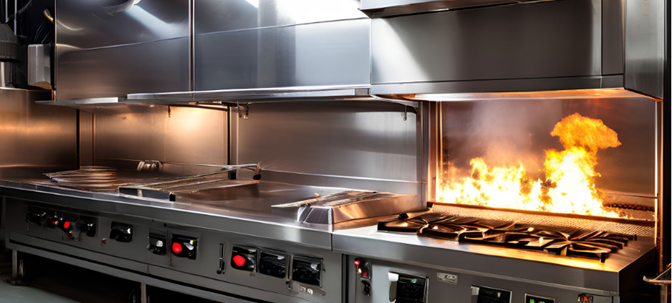
The Jacio Indicius ANSUL Partnership; Compliance, Installation & Ongoing Protection
Fire suppression system installation is not a commodity service. Correct installation is the difference between a system that performs as certified and a system that fails at the moment it is most needed. Jacio Indicius’s authorised ANSUL dealer status, combined with our team’s professional installation capability and more than a decade of commercial kitchen equipment experience, ensures that every ANSUL system we supply is installed to the manufacturer’s specifications, commissioned correctly, and documented for compliance purposes. Our ongoing inspection and maintenance service ensures that your ANSUL protection remains in verified, operational condition throughout its service life.
Installation & Commissioning | Factory-standard deployment by certified technicians. Equipment configured, tested, and verified against manufacturer specifications before your kitchen goes live. |
Annual Maintenance Contracts (AMC) | Structured preventive maintenance schedules that protect operational continuity. Documented service records, priority response, and transparent pricing. |
Genuine Spare Parts Supply | OEM-certified components supplied directly; no substitutes, no counterfeit risk, no warranty compromise. The right part delivered and installed correctly. |
Equipment Demonstrations | Live in-kitchen demonstrations prior to purchase. Evaluate real-world performance, ask technical questions, and procure with full confidence. |
Kitchen Design Consulting | End-to-end layout and equipment selection consulting; mapping your workflow, output volumes, and compliance requirements to the optimal equipment configuration. |
Staff Training | Hands-on operational training covering correct use, cleaning protocols, safety procedures, and output optimisation; extending equipment life and maximising ROI from day one. |
ANSUL Fire Suppression; Critical Questions for Kitchen Operators
How often does an ANSUL suppression system require inspection and maintenance?
NFPA 96 and applicable international standards require commercial kitchen fire suppression systems to be inspected by a certified professional at least semi-annually; with more frequent inspection recommended for high-volume operations where system components are subject to greater environmental exposure from grease and cooking vapours. Regular inspection verifies agent cylinder pressure, nozzle coverage integrity, detection component function, and control hardware operation. Jacio Indicius provides structured AMC programmes that manage this inspection schedule, ensuring your system remains in certified, operational condition and that your compliance documentation is current.
What is the difference between Appliance-Specific and Overlapping design configurations?
The Appliance-Specific configuration aims individual R-102 nozzles directly at the specific hazard zones of each piece of cooking equipment; the fryer oil surface, the griddle cooking surface, the broiler cooking grate. This targeted approach provides precise suppression delivery to the actual ignition locations specific to each appliance type. The Overlapping configuration arranges nozzles to create a continuous zone of suppression coverage across a group of appliances, with nozzle patterns overlapping to ensure no gap in coverage. The Overlapping design is particularly useful for flexible or frequently reconfigured kitchen layouts where appliance positions may change. Both configurations meet UL 300 standards, and both can be combined in a single installation.
Can ANSUL systems be installed in mobile food trucks and non-standard kitchen environments?
Yes. The ANSUL R-102 system is explicitly designed for a wide range of commercial kitchen environments, including mobile food trucks, catering trailers, and non-standard cooking installations. The system’s flexible design; with multiple agent cylinder sizes and nozzle configurations; allows it to be adapted to the space and equipment constraints of non-standard environments while maintaining full UL 300 compliance. For food truck operators, catering companies, and mobile kitchen operators, ANSUL provides the same level of certified fire protection that fixed-location restaurant kitchens depend upon.