Table of Contents
What Are Commercial Kitchen Hoods?
Why Different Hood Types Exist
Main Types of Commercial Kitchen Hoods
How to Choose the Right Hood Type
Key Factors to Consider
Common Mistakes to Avoid
Why Hood Maintenance Matters
What Is Kitchen Hood Maintenance?
Key Components That Require Maintenance
Basic Maintenance Tasks for Kitchen Hood Systems
Cleaning Frequency Guidelines
Impact of Poor Maintenance
Signs Your Hood System Needs Attention
Best Practices for Hood Maintenance
What is a Commercial Kitchen Hood?
Why Kitchen Hood Systems Are Essential
Key Components of a Kitchen Hood System
Types of Commercial Kitchen Hoods
How a Kitchen Hood Works
Basic Installation Considerations
Maintenance and Cleaning Basics
Common Mistakes to Avoid
Frequently Asked Questions
Final Thoughts on Hood Maintenance
Different Types of Commercial Kitchen Hood
A commercial kitchen hood is a ventilation system installed above cooking appliances to collect airborne pollutants, heat, smoke, and grease. It immediately affects compliance, efficiency, and safety and is an essential part of any professional kitchen setup.
Because different kitchen designs have very distinct ventilation needs, it’s critical to understand the many types of commercial kitchen hoods. The operating environments of a high-volume hotel kitchen, a cloud kitchen, and a tiny café differ greatly. To guarantee enough ventilation and contamination removal, the hood system must be chosen appropriately.
In addition to enhancing air quality, a well-designed hood system promotes improved working conditions and reliable kitchen performance.
Why Different Hood Types Exist
The layout and functionality of commercial kitchens vary widely. Depending on its structure, equipment, menu, and service volume, every kitchen has different needs.
There are many hood systems available to:
• Manage different heat and grease output amounts
• Adjust to various kitchen designs and available space.
• Assist with particular cooking tools and procedures
• Comply with safety and ventilation regulations
These variations are not insignificant. For instance, compared to a bakery or prep-focused kitchen, a kitchen that uses deep fryers and charbroilers generates a lot more smoke and grease. The kind and capacity of hood needed are directly impacted by this.
Main Types of Commercial Kitchen Hoods
Professional kitchens frequently use a variety of hood types, each with a distinct function.
Wall-Mounted Canopy Hoods
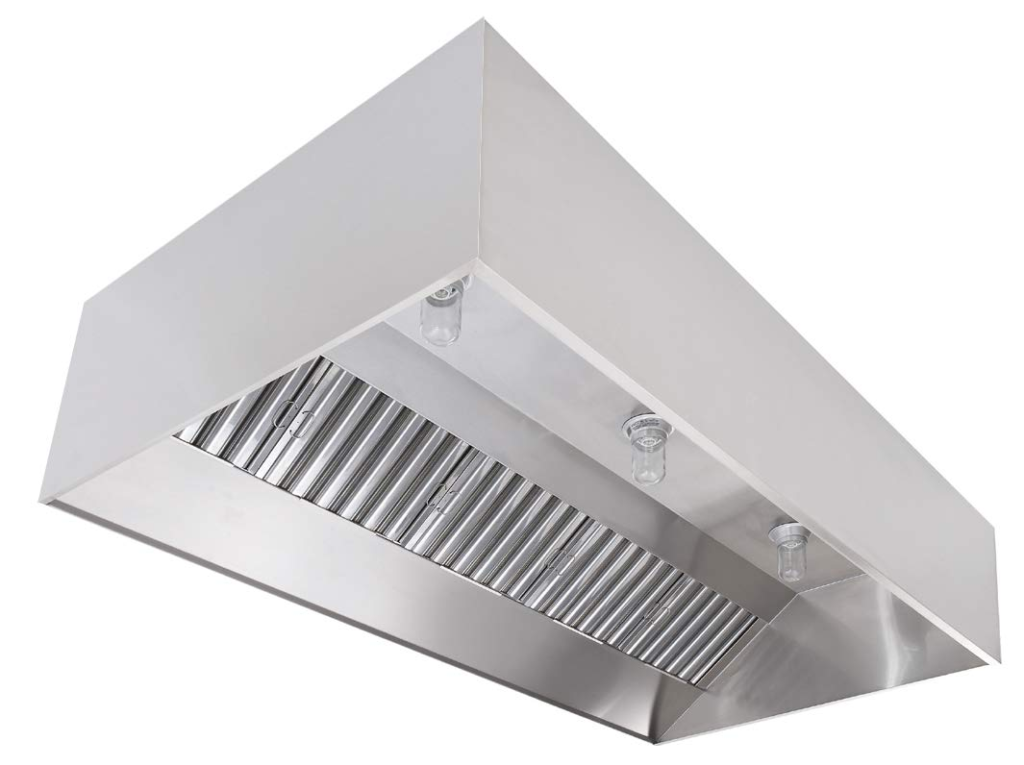
• Mounted above cooking appliances against a wall
• Fit for demanding cooking tasks
• Frequently found in hotel kitchens and restaurants
Because they can withstand high heat and grease loads, wall-mounted canopy hoods are the most popular. They are made to effectively collect increasing pollutants and channel them into the exhaust system.
Kitchens with several high-intensity cooking appliances, like fryers, grills, and ranges, benefit greatly from these hoods. They are dependable for continuous operations because of their design, which permits constant airflow.
Island Canopy Hoods
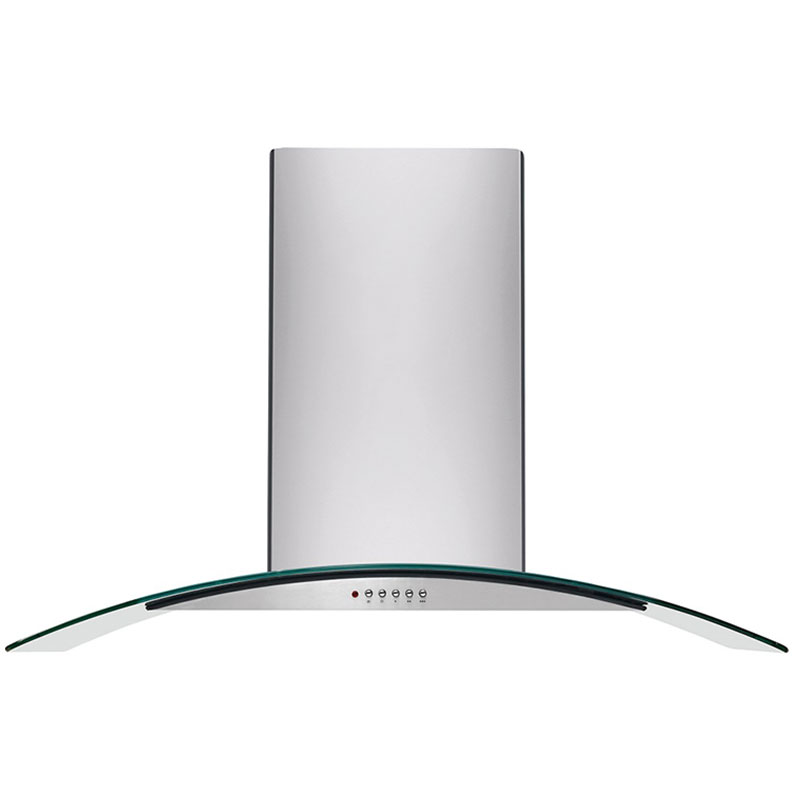
• Placed over appliances in the kitchen’s centre
• Offers ventilation from every angle.
• Applied to open kitchen designs
Larger kitchens or areas with centrally located cooking appliances frequently include island hoods. They have to collect pollutants from several angles, unlike wall-mounted devices.
This increases the complexity of airflow design. To guarantee that heat and smoke are efficiently eliminated without dispersing around the kitchen, proper dimensions and exhaust capacity are crucial.
Low Proximity Hoods
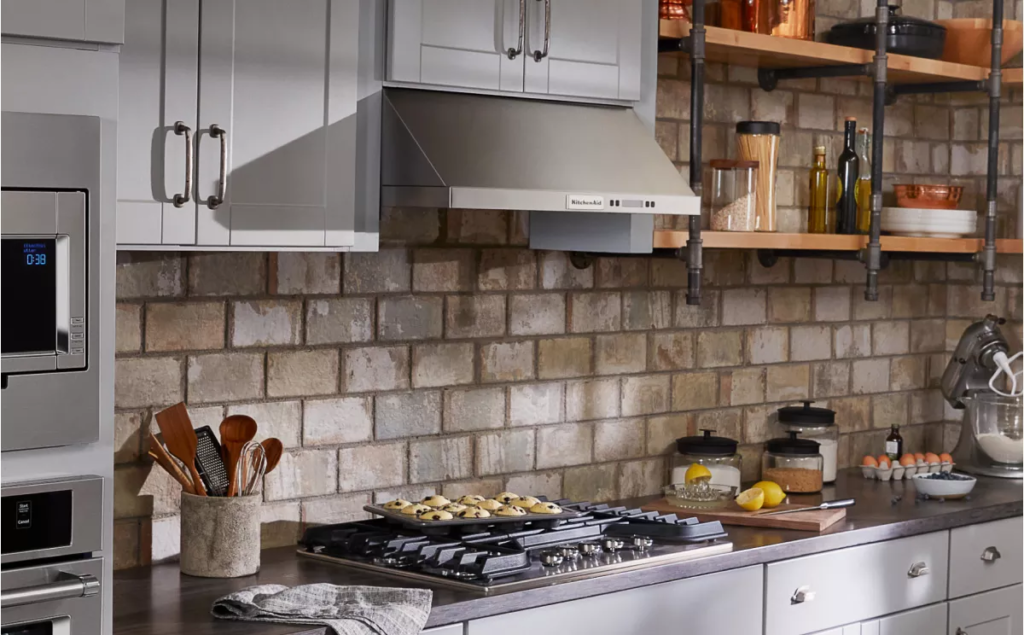
• Placed nearer to the cooking appliances
• Made with focused ventilation in mind
• Fit for small kitchens
The purpose of low-proximity hoods is to collect pollutants right at their source. Even in tiny kitchens, they can be very effective because they are placed closer to the cooking surface.
When space is at a premium, these hoods are frequently utilised for certain equipment. They are a useful option for small or specialised kitchen setups since they lessen the spread of heat and oil.
Ventless Hoods

• Don’t use any external ducting
• To purify the air, use filtering systems.
• Appropriate in situations where installing ducts is not feasible
In situations where conventional ducting is impractical, ventless hoods offer a versatile solution. They use sophisticated filters to clean and recirculate air back into the kitchen rather than releasing it outside.
Although they are easy to install, they are usually best suited for lighter cooking applications. For the filtration system to continue operating efficiently, routine maintenance is necessary.
Backshelf Hoods
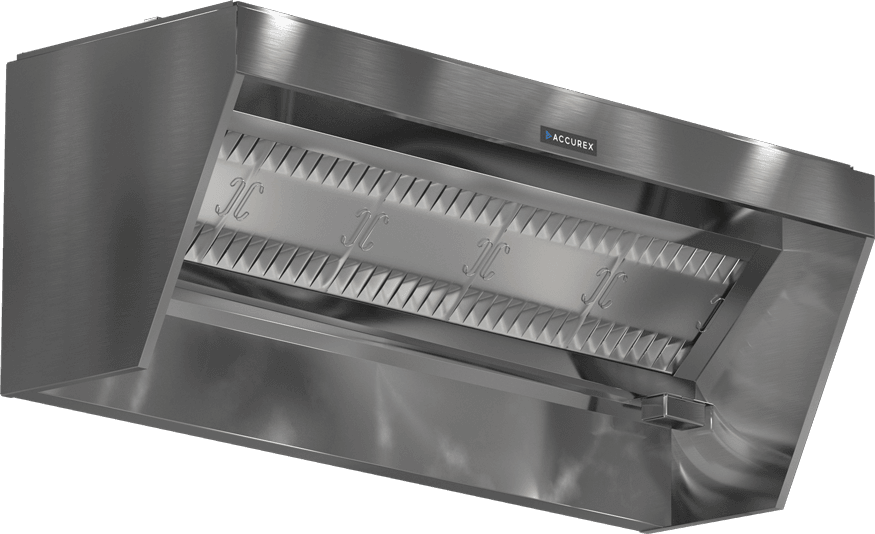
• Positioned behind cooking appliances
• Design that uses less space
• Applied to smaller kitchens
Backshelf hoods are made for kitchens with little overhead space. By collecting impurities at the rear of the apparatus, they offer concentrated ventilation.
In medium-duty cooking settings, these devices are frequently utilised. Even though they are small, effective performance still depends on careful airflow planning.
How to Choose the Right Hood Type
A thorough understanding of operational requirements is necessary for choosing the best hood system.
Important factors include:
• The kind of culinary appliances utilised
• The amount of heat and grease produced
• The arrangement of the kitchen and the space available
• Requirements for safety and compliance
The performance of the hood system is influenced by each of these variables. For instance, compared to a prep-focused kitchen, a kitchen with a high grease output will need a more reliable system.
A well-chosen hood guarantees that ventilation is efficient under all working circumstances. Additionally, it lowers the possibility of performance problems and aids in upholding safety regulations.
Key Factors to Consider
It is crucial to make an assessment of both operational and technical aspects before completing a hood system.
• Requirements for exhaust and airflow capacity
• Installation constraints and the viability of ducting
• Cleaning and upkeep are simple.
• Durability and long-term performance
Over time, the system’s performance is determined by these elements. Poor duct design can lower overall efficiency, and a system with inadequate airflow capacity will find it difficult to remove impurities.
At this point, careful planning guarantees that the ventilation system facilitates efficient kitchen operations and reduces the need for future maintenance.
Common Mistakes to Avoid
Inadequate layout or bad hood selection causes ventilation problems in many kitchens.
Typical errors consist of:
• Selecting a hood without considering the intensity of cooking
• The hood system’s incorrect size
• Disregarding the need for ventilation and airflow
• Making decisions only on the basis of price rather than performance
These errors frequently result in ineffective ventilation and higher operating expenses.Commercial kitchen hood systems operate dependably and promote long-term kitchen efficiency when these mistakes are avoided.
Why Hood Maintenance Matters
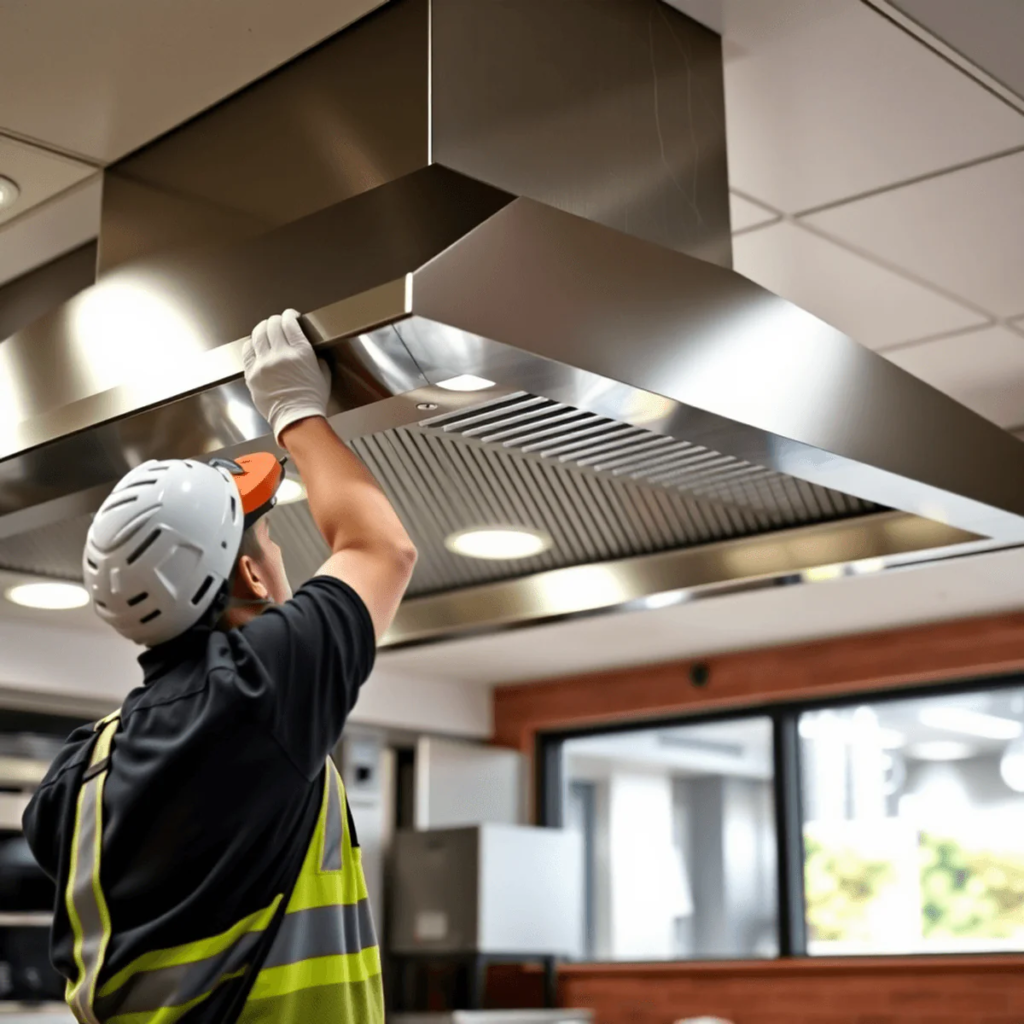
In a commercial kitchen, a kitchen hood system manages airborne pollutants, heat, smoke, and grease continuously. This eventually causes accumulation in the system, which can lower effectiveness and raise safety concerns.
Because maintenance directly affects system performance, fire safety, and compliance, it is crucial to understand the commercial kitchen hood maintenance basics. Grease buildup, less airflow, and increased operating expenses might result from a poorly maintained hood system.
Frequent maintenance guarantees that the system operates effectively and promotes a secure workplace.
What Is Kitchen Hood Maintenance?
The routine cleaning, inspection, and servicing of every part of the kitchen hood system is referred to as kitchen hood maintenance.
It consists of:
- Grease filters and hood surfaces should be cleaned.
- Examining channels for accumulation
- Evaluating the performance of exhaust fans
- Tracking the effectiveness of airflow
These actions guarantee that the system will continue to function efficiently.
An organised maintenance strategy guarantees that ventilation systems continue to be dependable over time and helps avoid performance problems.
Key Components That Require Maintenance
There are several parts to a kitchen hood system, and each one needs to be maintained on a regular basis.
Important elements consist of:
- The hood canopy
- Filters for grease
- The exhaust ducts
- The exhaust fan
- The air system for makeup
Every element contributes to the functionality of the system.
Fans provide airflow, ducts transport tainted air, and grease filters collect oil particles. The system as a whole may become ineffective if any of these parts are not adequately maintained.
Basic Maintenance Tasks for Kitchen Hood Systems
A number of routine actions that should be carried out consistently are part of regular maintenance.
Important jobs consist of:
- Grease filter cleaning on a regular basis
- Grease removal by wiping the hood’s surfaces
- Examining channels for accumulation
- Monitoring noise levels and fan performance
These activities support the upkeep of system effectiveness.
Grease buildup, one of the main reasons for decreased airflow and fire dangers, is avoided with regular cleaning. Frequent inspections also help spot problems before they worsen.
Cleaning Frequency Guidelines
How often you maintain your kitchen hood comes down to one thing: how hard the kitchen is actually running. A slow-moving café and a busy restaurant kitchen are not the same situation, and treating them the same way is how you end up with grease buildup you didn’t see coming.
At a minimum, wipe down visible hood surfaces every day. Grease filters need to be properly cleaned once a week, whereas fans and ducts should be inspected on a monthly basis. That’s the baseline, not the gold standard.
High-volume kitchens are a different story. More heat, more oil, more output means the system works harder and dirties faster. If you’re running a full-service kitchen through lunch and dinner every day, weekly filter cleaning might not cut it. You may need to go in more often, and the only way to know is to actually check rather than assume the schedule is holding up.
The point is that maintenance intervals are a starting point. Usage tells you whether to stick with them or tighten them up. A system that runs clean runs better, and the cost of staying on top of it is always less than the cost of fixing a problem that built up quietly over weeks.
Impact of Poor Maintenance
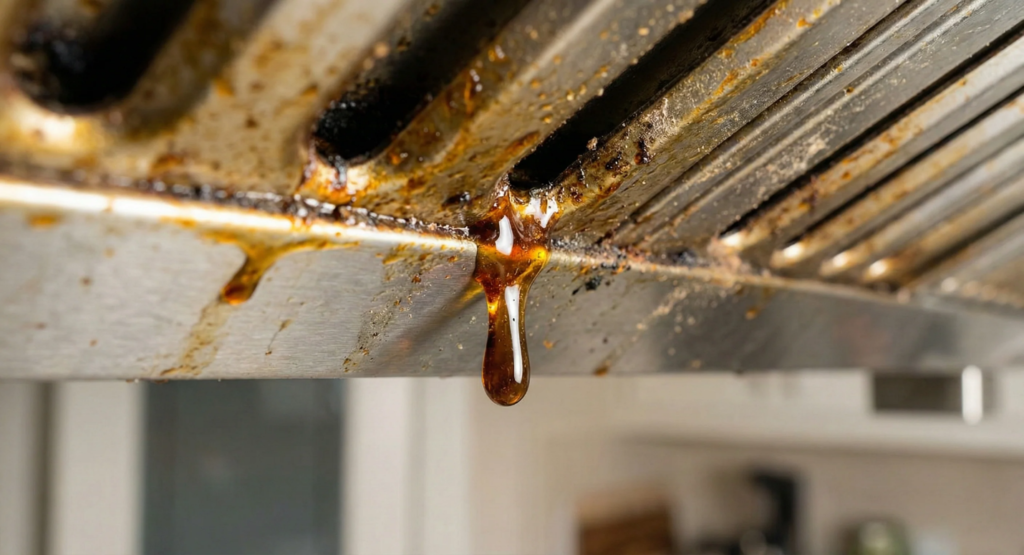
Numerous operational and safety problems might result from neglecting maintenance.
Typical effects include:
• Grease accumulation raises the risk of fire
• A decrease in the efficiency of airflow
• Increased use of energy
• Problems with equipment performance
Both operations and safety are impacted by these problems.
Inadequate upkeep can eventually result in expensive repairs and possible legal infractions. Regular maintenance helps reduce these dangers.
Signs Your Hood System Needs Attention
Early problem detection aids in averting more serious difficulties.
Typical indicators consist of:
• Grease accumulation that is visible on surfaces
• A decrease in airflow or smoke buildup
• Unusual exhaust fan noise
• A higher temperature in the kitchen
These indicators show that the system needs to be maintained.
System performance may continue to decline if these indicators are ignored. Timely action is ensured by routine monitoring.
Best Practices for Hood Maintenance
Maintaining long-term system efficiency is facilitated by adhering to best practices.
Among the best practices are:
- Establishing a routine maintenance schedule
- Educating employees on fundamental cleaning techniques
- Performing expert inspections on a regular basis
- Maintaining records of upkeep
These procedures guarantee accountability and uniformity.
A well-maintained system guarantees that the fundamentals of commercial kitchen hood maintenance are successfully followed, enhancing both performance and safety.
What is a Commercial Kitchen Hood?
A commercial kitchen hood is a ventilation system that is placed directly above cooking appliances to collect and eliminate heat, smoke, oil, and airborne pollutants produced during food preparation.
Since it regulates the environment at the source of cooking activity, it is one of the most important parts of any kitchen hood system. Without it, pollutants quickly spread throughout the kitchen, compromising worker comfort, safety, and air quality.
A hood system keeps operations steady, safe, and effective throughout service hours in high-volume kitchens where equipment runs constantly.
Why Kitchen Hood Systems Are Essential
Systems for kitchen hoods are more than an accessory. They are an essential prerequisite for effective and safe kitchen operations.
They assist with:
- Eliminating smoke and heat from areas used for cooking
- Preventing the accumulation of grease particles
- Enhancing the quality of indoor air for employees
- Encouraging fire safety measures
The working circumstances in a kitchen are directly impacted by these functions.
Uncontrolled heat and smoke make the environment hazardous and uncomfortable. While poor air quality reduces worker productivity, grease buildup raises the risk of a fire. A commercial kitchen exhaust hood that is in good working order guarantees that the kitchen will continue to run even during busy times.
Key Components of a Kitchen Hood System
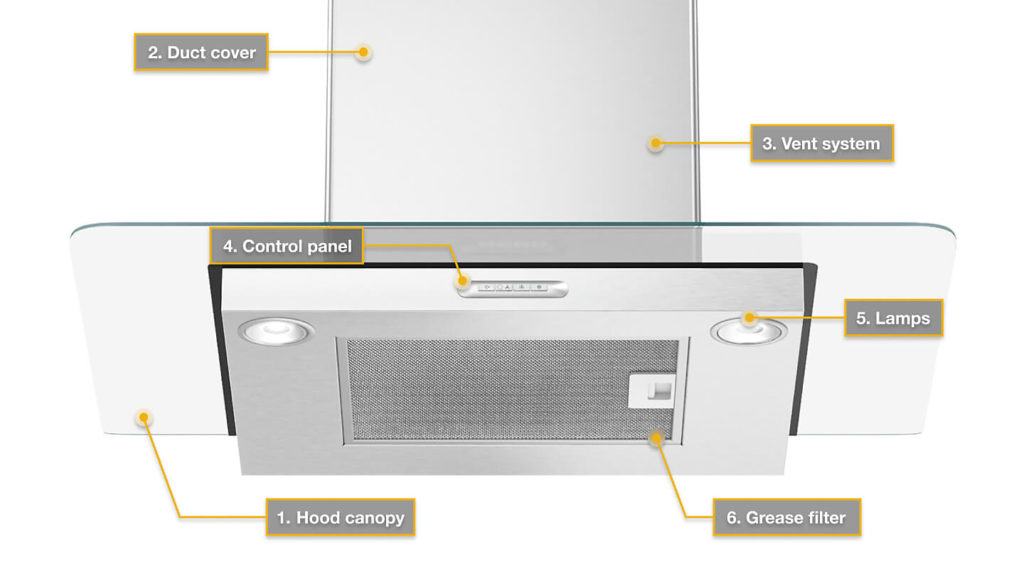
Each of the many interrelated parts that make up a whole kitchen hood system has a distinct function.
Important elements consist of:
● The hood canopy
● Grease filters
● Ducts for exhaust
● The exhaust fan
● System for supplying fresh air
Together, these elements sustain airflow and effectively eliminate impurities.
Ducts carry contaminated air out of the kitchen, the exhaust fan guarantees continuous removal, the canopy absorbs rising odours at the source, and filters catch grease particles to avoid buildup. In order to maintain smooth airflow without interfering with cooking processes, the fresh air system regulates the pressure.
Types of Commercial Kitchen Hoods
Depending on the layout and level of cooking, several commercial kitchen hood types are needed for different sorts of kitchens.
Typical kinds include:
● Canopy hoods installed on the wall
● Hoods on islands
● Hoods with low proximity
● Hoods without vents
Every kind fulfils a distinct function and operational need.
Canopy hoods, for instance, are appropriate for heavy-duty cooking settings like hotels and restaurants. When cooking equipment is positioned in the middle, island hoods are utilised. In small spaces where ducting is impractical, ventless hoods are utilised. Choosing the appropriate hood type guarantees adequate ventilation and adherence to safety regulations.
How a Kitchen Hood Works
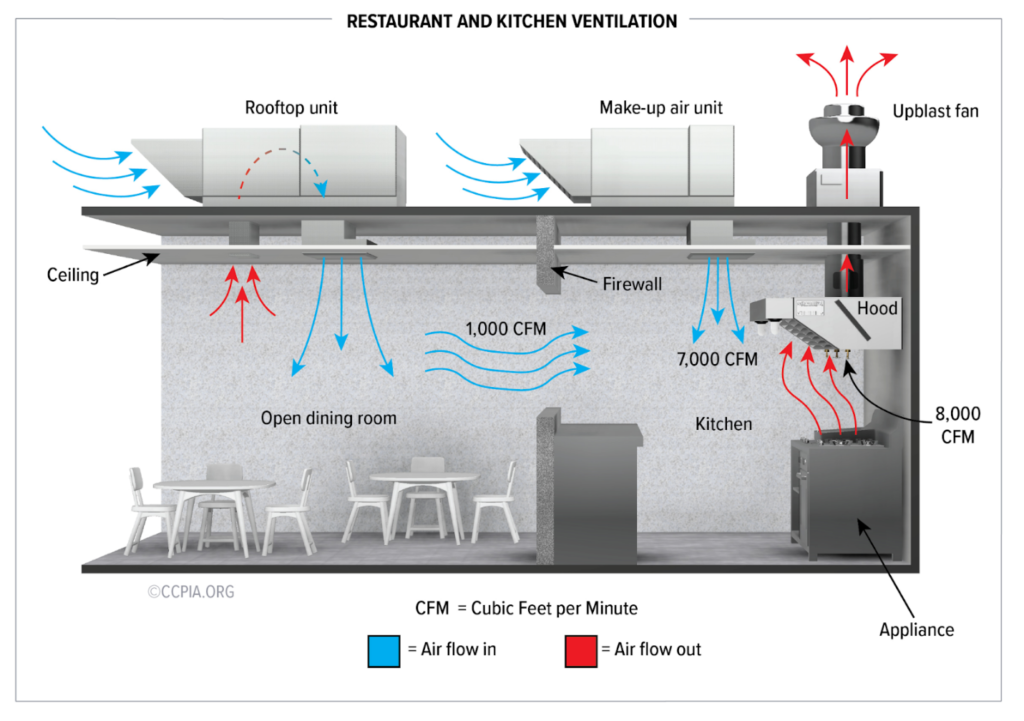
A kitchen ventilation hood eliminates pollutants from the kitchen by means of a continuous airflow procedure.
The procedure consists of:
- Cooking appliances naturally produce heat and smoke.
- These pollutants are captured at the source by the hood.
- Oil particles are captured by grease filters.
- The kitchen’s ducts direct the air out.
- Contaminated air is expelled outside by exhaust blowers.
During culinary operations, this cycle is constantly repeated.
When this system works properly, heat, smoke, and grease don’t build up within the kitchen. Additionally, improved cooking conditions and fewer interruptions during service are supported by efficient ventilation.
Basic Installation Considerations
Commercial exhaust system installation calls for meticulous preparation and technical accuracy.
Important things to think about are:
- Adjust the hood size according to the equipment configuration.
- Appropriately positioned directly above cooking stations.
- Smooth airflow through effective duct design
- Sufficient exhaust capacity to eliminate heat and smoke
The effectiveness of the system is determined by each of these elements.
Poor ventilation, higher energy use, and operational inefficiencies might result from improper installation. Consistent performance and long-term dependability are guaranteed by a well-designed and installed hood system.
Maintenance and Cleaning Basics
Kitchen hood systems must have routine maintenance in order to function effectively and safely.
Basic upkeep duties consist of:
- Regularly cleaning grease filters.
- Examining ducts for the accumulation of grease
- Examining the efficacy of exhaust fans
- Keeping an eye on the consistency of airflow
These actions greatly lower the risk of fire and stop grease buildup.
Ignoring maintenance can eventually lower system performance and pose a risk to public safety. Frequent cleaning prolongs the system’s operational life and guarantees optimal performance.
Common Mistakes to Avoid
Due to inadequate planning or maintenance procedures, many kitchens have ventilation problems.
Typical errors consist of:
- Choosing the incorrect sort of hood for the kitchen
- The hood system’s incorrect size
- Airflow is impacted by poor duct design.
- Ignoring routine upkeep and cleaning
These errors may result in decreased productivity and elevated safety hazards.
Preventing these problems guarantees that the commercial kitchen hood operates efficiently and facilitates seamless kitchen operations in all circumstances.
Frequently Asked Questions
How frequently should kitchen hoods be cleaned?
Regular cleaning is crucial; the frequency of cleaning depends on usage.
What makes grease accumulation hazardous?
It raises the risk of a fire and is extremely combustible.
Can poor maintenance affect airflow?
Indeed. It lowers system performance and ventilation efficiency.
Does it need to be cleaned by professionals?
Indeed. For compliance, deep cleaning on a regular basis is advised.
What occurs if upkeep is neglected?
It may result in increased expenses, inefficiencies, and safety hazards.
What is the purpose of a commercial kitchen hood?
It collects and eliminates odours, heat, smoke, and grease from the kitchen.
Do kitchen hood systems have to be installed?
Indeed. For safety and compliance, the majority of commercial kitchens need to have adequate ventilation systems.
What distinguishes ventless hoods from ducted hoods?
While ventless systems filter and circulate air, ducted systems remove air from the outside.
How frequently should hood systems be cleaned?
Cleaning should be done frequently to preserve efficiency, although this varies depending on consumption.
Does performance depend on the size of the hood?
Indeed. Inadequate size lowers system efficacy and airflow efficiency.
Final Thoughts on Hood Maintenance
Maintaining a safe and effective cooking environment requires a good comprehension of the commercial kitchen hood maintenance basics.
Frequent cleaning and inspection guarantee that the system operates efficiently, lowers the risk of fire, and promote seamless operations. Additionally, it increases energy efficiency and prolongs the life of equipment.
It is not only necessary to have a well-maintained hood system. It is essential to operate a kitchen responsibly.
Building a safe, effective, and compliant cooking environment requires an understanding of the fundamentals of commercial kitchen hoods.
Hood systems are essential to everyday operations, from lowering fire hazards to regulating air quality. They also improve worker comfort and equipment longevity.
The kitchen will function well under pressure if the proper system is selected, installed, and maintained on a regular basis.
A well-thought-out kitchen hood system requires more than just installation. It is an ongoing operating requirement.