Table of Contents
- Why Commercial Kitchen Mistakes Are Costly
- What are common commercial kitchen mistakes?
- Mistake One: Poor Workflow Planning
- Mistake Two: Ignoring Zoning and Functional Separation
- Mistake Three: Overcrowding Equipment
- Mistake Four: Underestimating Ventilation and Heat Load
- Mistake Five: Poor Space and Storage Planning
- Mistake Six: Treating Compliance as a Final Step
- Mistake Seven: Neglecting Maintenance and After-Sales Support
- How to Avoid These Mistakes from Day One
- Frequently Asked Questions
- Final Thoughts and Expert Takeaways
Why Commercial Kitchen Mistakes Are Costly
Commercial kitchen performance issues are usually not caused by a lack of effort. Most problems result from a series of early decisions that seem minor at first but accumulate over time.
Planning mistakes in the kitchen impact all aspects of operations. Staff have trouble moving efficiently, equipment can break down faster, hygiene is harder to maintain, and inspections are more stressful. These issues increase costs and decrease reliability.
Most commercial kitchen mistakes are not caused by technical problems but by a lack of proper preparation. The good news is that most of these issues can be prevented.
What are common commercial kitchen mistakes?
Common commercial kitchen mistakes are repeated problems in design, planning, or operations that happen in restaurants, cloud kitchens, and catering facilities.
These errors typically occur when:
· Decisions are made quickly.
· Operations and design are not in sync.
· Compliance is handled like paperwork.
· Kitchens are designed without consulting experts.
By noticing these patterns early, operators can avoid expensive repairs and disruptions.
Mistake One: Poor Workflow Planning
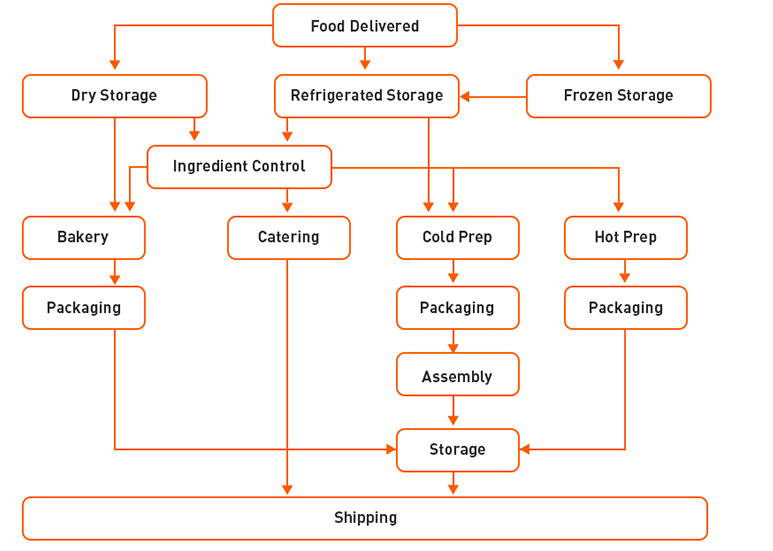
Designing the kitchen without mapping the workflow is one of the most common errors.
In unplanned kitchens, employees:
· Repeatedly cross paths
· Walk a lot between chores.
· During peak service, they interfere with one another.
This reduces productivity and increases fatigue. Eventually, teams work harder to compensate, which leads to inconsistency and burnout.
To avoid this mistake, start by mapping how food moves from delivery, storage, and prep, all the way to cooking, plating, dispatch, and cleaning. When everyone understands the process, efficiency improves.
Mistake Two: Ignoring Zoning and Functional Separation
Not clearly defining functional zones is another significant mistake.
When prep, cooking, washing, and waste areas are not clearly separated, hygiene problems increase and inspections become harder. Even experienced staff struggle without clear zones.
Appropriate zoning guarantees:
· There is no crossover between clean and unclean activities.
· Prep areas are still tidy.
· During busy hours, dispatch runs smoothly. Kitchens that ignore zoning often spend more time fixing hygiene issues than serving their customers.
Mistake Three: Overcrowding Equipment
Higher capacity does not equate to more equipment.
I frequently observe kitchens stocked with infrequently used appliances, while necessary equipment is misplaced or unreachable. Overcrowding causes:
- Limited mobility
- Increased accumulation of heat
- Difficult upkeep and cleaning
- A rise in malfunctions
By choosing equipment according to menu, volume, and usage frequency, you can prevent this. Equipment location should be determined by workflow and space, not the other way around.
Mistake Four: Underestimating Ventilation and Heat Load
A lot of the time, ventilation is neglected.
Inadequate ventilation causes:
- Excessive heat and discomfort
- Accumulation of grease on surfaces
- Increased chance of fire
- Decreased lifespan of equipment
Underestimating heat load causes problems with staff retention and frequent maintenance. Long-term performance depends on airflow planning and hood sizing.
Mistake Five: Poor Space and Storage Planning
One of the most neglected elements of kitchen design is storage.
When there is not enough storage:
- Prep spaces get messy.
- Ingredients are kept in an unsafe manner
- Inventory management deteriorates
Adequate dry storage, cold storage, and holding areas must be included in space planning. Cost control, speed, and hygiene are all supported by effective storage planning.
Mistake Six: Treating Compliance as a Final Step
Compliance is often viewed as an issue that needs to be resolved right before a project opens.
This results in:
- Last-minute modifications to the design
- Inspections that failed
- Launches that are delayed
Layout, equipment selection, ventilation, and zoning should all be guided by compliance needs from the outset. Compliance-focused kitchen designs experience fewer interruptions and function more confidently.
Mistake Seven: Neglecting Maintenance and After-Sales Support
If upkeep is neglected, even well-designed kitchens will fail.
Typical outcomes consist of:
- Unexpected malfunctions in the equipment
- Reduced levels of hygiene
- An increase in service outages
Preventive maintenance and post-purchase assistance are not optional extras. They are a component of environmentally friendly kitchen operations. Maintenance plans help kitchens stay efficient and prolong the life of their equipment.
How to Avoid These Mistakes from Day One
Experience has shown that kitchens that steer clear of common commercial kitchen mistakes require a methodical approach:
- Establish explicit zoning principles and define workflow before layout.
- Choose equipment according to its intended usage.
- Plan utilities and ventilation in advance.
- Include compliance in the design and make a commitment to continuous upkeep.
Planning, operations, and long-term performance are all in line with this strategy.
Frequently Asked Questions
Do small kitchens also frequently make similar mistakes?
Indeed. Due to space constraints, smaller kitchens frequently see the effects more quickly.
Can these errors be fixed at a later time?
Some can, but corrections are typically costly and inconvenient.
Is professional planning actually required?
Expert advice enhances long-term results and helps prevent expensive trial and error.
Do cloud kitchens make the same errors?
Indeed. Cloud kitchens frequently have issues with dispatch flow, storage, and zoning.
How early should planning start in order to prevent errors?
Before the layout is finalized or equipment is purchased, at the concept stage.
Final Thoughts and Expert Takeaways
The majority of issues with commercial kitchens don’t arise right away. On the first day of planning, they begin.
Typical commercial kitchen errors are foreseeable, recurring, and preventable. Operations become more resilient and seamless when kitchens are designed with workflow, zoning, compliance, and maintenance in mind. When building a new kitchen or renovating an old one, pay close attention to preventing these errors at the outset. Effective planning choices promote scalable commercial kitchen solutions and long-term operational stability.