Table of Contents
• Why Execution Risk Is Often Underestimated
• What Execution Risks Should You Anticipate?
• Design and Utility Load Miscalculations
• Equipment and Ventilation Integration Gaps
• Compliance and Regulatory Delays
• Sequencing and Installation Conflicts
• How I Approach Risk Mitigation in Kitchen Projects
• Frequently Asked Questions
• Final Thoughts and Specialist Takeaways
Why Execution Risk Is Often Underestimated
The layout and equipment of a commercial kitchen receive most of your focus during planning. Based on my observations, the execution presents a greater issue.
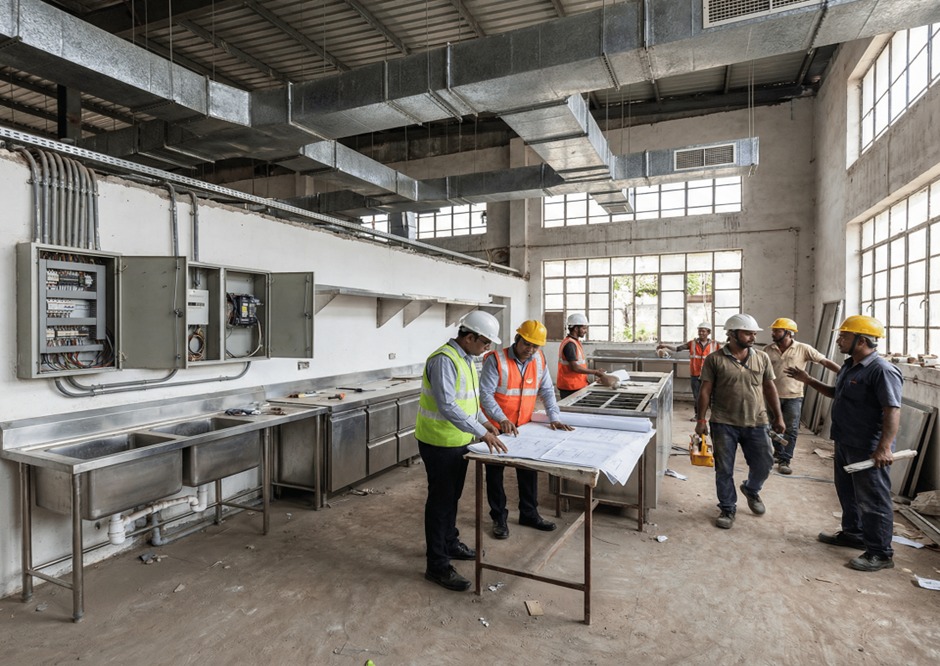
Architects, consultants, stainless steel fabricators, electrical contractors, LPG installation, ventilation teams, and fire safety specialists come together for a kitchen project. Small discrepancies can become costly adjustments if coordination is not clearly organised from the start.
I have seen electrical panels that were sized before the final equipment list was locked. Later additions of refrigeration and high-load ovens required improvements to the panels. Errors of this nature raise costs and delay commissioning.
Silently, the execution danger increases. Rarely does it make an early announcement.
What Execution Risks Should You Anticipate?
When I discuss commercial kitchen execution risks, I refer to the technical and coordination issues that arise between design approval and operational readiness.
You should expect:
- Inconsistency in utility capacity
- Modifications to the equipment during installation
- Gaps in ventilation performance
- Objections to inspection
- Inadequate sequencing
These hazards impact more than just timetables. They have an immediate effect on maintenance expenses and service dependability if they appear after opening.
Design and Utility Load Miscalculations
One of the most frequent failure spots is the validation of gas and electrical loads.
Before installing high-consumption appliances like induction stoves, deck ovens, blast chillers, or combi ovens, you need to make sure:
- An electrical load that the local distribution authority has approved
- Ratings for protective devices and panel capacity, Adequacy of gas pressure for simultaneous peak utilisation
In India, panels may need to be redesigned after installation due to inadequate load approval. That calls for rework and downtime.
You are increasing the project’s risk if you complete the equipment before verifying the utilities.
Equipment and Ventilation Integration Gaps
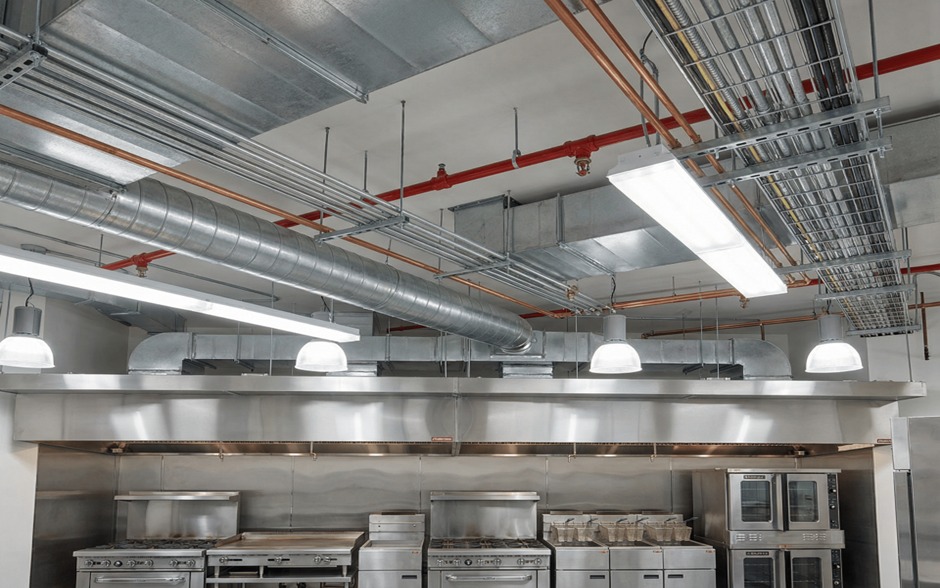
The actual cooking load must be matched by ventilation, not only theoretical calculations.
Typical integration issues consist of:
- The hood width does not cover the entire cooking line.
- Insufficient airflow from the exhaust
- Inadequate air balance for makeup
- Disagreements over clearance with fire suppression pipes
The National Building Code specifies rules for exhaust and fire safety. Inspection clearances could be delayed if equipment location, suppression systems, and duct routing are not coordinated.
Miscalculations in ventilation often only surface during load testing.
Compliance and Regulatory Delays
In India, commercial kitchens are subject to several regulatory frameworks.
You have to abide by:
- FSSAI Schedule 4 criteria for infrastructure and hygiene
- Requirements for the fire department NOC • Trade licensing and municipal health
- PESO’s LPG safety regulations
Changes are expected if compliance validation is delayed until inspection.
To turn inspections into confirmations rather than corrections, I incorporate compliance checks into layout planning.
Sequencing and Installation Conflicts
Sequencing problems can affect even technically sound projects.
Typical instances consist of:
- Before utilities are ready, equipment is delivered.
- Before the final equipment placement, ventilation should be installed.
- Damage to finished flooring during heavy or late installation
Site congestion and double handling result from improper sequencing. A planned installation schedule minimises these problems.
Technical precision is important, but so is execution order.
How I Approach Risk Mitigation in Kitchen Projects
Risk reduction starts before purchase.
In intricate kitchens, I concentrate on:
- Verifying gas and electrical capacity before equipment finalisation
- Comparing the ventilation configuration to the highest cooking load
- When developing layouts, incorporating FSSAI and fire regulations, and performing validation of service routing before fabrication.
- Outlining a precise installation process
The structure of coordinating responsibility distinguishes turnkey kitchen execution from fragmented execution.
When responsibility is centralised, commercial kitchen execution risks become manageable rather than reactive.
Frequently Asked Questions
Are there dangers associated with execution?
No. With early validation, the majority can be avoided.
Are there fewer hazards in smaller kitchens?
Not always. Space constraints may increase the frequency of routing conflicts.
What leads to significant delays?
Late compliance objections and utility miscalculations.
When should one start planning for risks?
before purchase, during concept design.
Does turnkey totally remove risk?
No, but fragmentation is greatly reduced by centralised accountability.
Final Thoughts and Specialist Takeaways
Executing a commercial kitchen involves more than just installation; it involves integration.
Project results are greatly enhanced when utilities, ventilation, compliance, equipment, and sequencing are coordinated early on. Uncertainty and post-installation adjustments are increased by fragmented cooperation.
If you want predictable commissioning and smoother operations, identify commercial kitchen execution risks early and structure accountability clearly from the start.