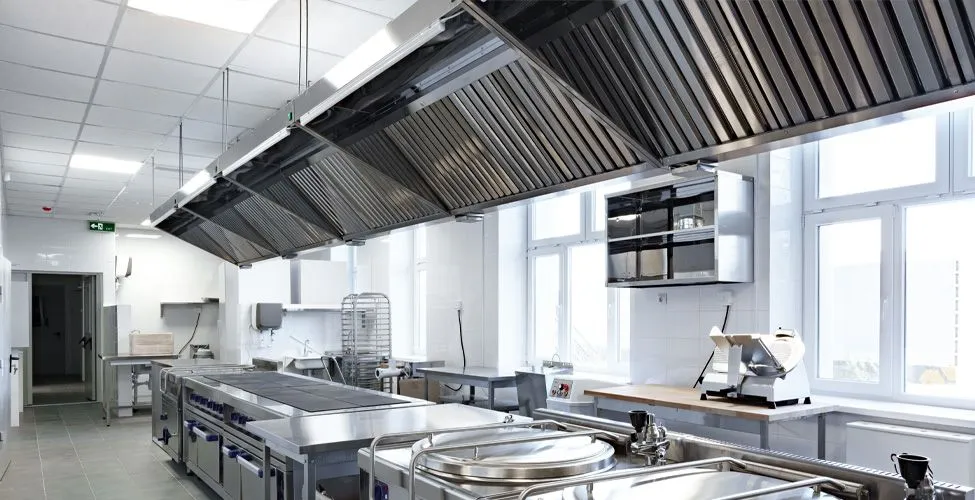
Table of Contents
Why Ventilation Design Matters
What Is Commercial Kitchen Ventilation Design?
Core Principles of Ventilation Design
Understanding Airflow and Pressure Balance
Key Components in Ventilation Design
Designing for Different Kitchen Layouts
Compliance and Safety Considerations
Common Design Mistakes
Best Practices for Effective Ventilation Design
Frequently Asked Questions
Final Thoughts on Ventilation Design
Why design of the Ventilation Matters?
The removal of heat and smoke is only one aspect of ventilation. It involves establishing a regulated setting in which culinary operations can function effectively, securely, and reliably.
With a well-designed ventilation system, grease and pollutant buildup are avoided, temperature regulation is maintained well, and airflow balance is supported. On the other hand, ineffective airflow, safety hazards, and operational disruptions result from poor planning.
Because every kitchen has different needs depending on its layout, equipment, and cooking intensity, it is crucial to understand commercial kitchen ventilation design.
What Is Commercial Kitchen Ventilation Design?
The planning and setup of systems that remove contaminated air and replace it with fresh air in a controlled manner is referred to as commercial kitchen ventilation design.
It includes:
- Creating systems for exhaust airflow
- Arranging for a backup air supply
- Combining duct and hood systems
- Making sure the air is properly balanced
The stability of the kitchen environment under all working conditions is guaranteed by this procedure.
A well-designed system supports long-term operational performance, increases energy efficiency, and improves air quality.
Core Principles of Ventilation Design
The planning and setup of systems that remove contaminated air and replace it with fresh air in a controlled manner is referred to as commercial kitchen ventilation design.
It includes:
- Creating systems for exhaust airflow
- Arranging for a backup air supply
- Combining duct and hood systems
- Making sure the air is properly balanced
The stability of the kitchen environment under all working conditions is guaranteed by this procedure.
A well-designed system supports long-term operational performance, increases energy efficiency, and improves air quality.
Understanding Airflow and Pressure Balance
One of the most important components of ventilation design is airflow management.
Important elements consist of:
- Keeping the pressure neutral or slightly negative
- Ensuring a sufficient quantity of fresh air
- Preventing interruptions to airflow
- Encouraging reliable exhaust performance
The efficiency of air movement in the kitchen is determined by these elements.
Unbalanced pressure can impact burner performance, lower ventilation efficiency, and make workers uncomfortable. A well-designed ventilation system guarantees smooth operation without interfering with the cooking process.
Key Components in Ventilation Design
A full ventilation system is made up of a number of interrelated parts.
Important elements consist of:
• A kitchen canopy or hood
• Filters for grease
• The duct system
• Exhaust Fans
• Air units
Every element needs to be carefully chosen and incorporated into the ventilation design.
The hood collects impurities, filters eliminate oil, ducts carry air, and fans release it outdoors. To keep the equilibrium, the make-up air system refills the exhausted air. These elements work together to create a unified system that facilitates effective kitchen operations.
Designing for Different Kitchen Layouts
The kitchen’s physical layout and ventilation design must coincide.
Different methods are needed for different layouts:
- Cooking lines mounted on walls
- Cooking settings on the central island
- Kitchens that are small or have limited space
- Designs for open kitchens
Every layout has different airflow and system placement issues.
For instance, in order to maximise efficiency, compact kitchens need to be placed precisely, whereas island kitchens need to collect airflow in multiple directions. Regardless of configuration, a well-thought-out commercial kitchen ventilation system guarantees that airflow stays efficient.
Compliance and Safety Considerations
Systems for ventilation must adhere to safety and hygienic regulations.
Important things to think about are:
• Requirements for fire safety
• Appropriate grease filtration
• Sufficient exhaust capacity
• Standards for routine maintenance
Both operational approval and safety depend on compliance.
Penalties, safety hazards, and operational shutdowns may follow noncompliance with these rules. A well-designed system guarantees that the kitchen functions securely and satisfies all requirements.
Common Design Mistakes
Poor design choices cause ventilation problems in many kitchens.
Typical errors consist of:
• The wrong size of the hood
• Inadequate duct routing
• Insufficient capacity for airflow
• Disregarding the need for make-up air
These problems lead to long-term operating difficulties and lower system efficiency.
Preventing these errors guarantees constant kitchen operations and dependable ventilation system performance.
Best Practices for Effective Ventilation Design
System lifetime and performance are enhanced by a methodical approach to design.
Among the best practices are:
• Creating systems based on process and equipment
• Making sure the hood is positioned correctly
• Making plans for maintenance access
• Keeping an eye on airflow performance
These procedures lessen operational hazards and preserve efficiency.
A well-designed commercial kitchen ventilation system guarantees that every part functions flawlessly and produces reliable outcomes over time.
Frequently Asked Questions
What does commercial kitchen ventilation design entail?
It involves designing airflow systems to eliminate impurities and preserve air equilibrium.
What makes airflow balance crucial?
It guarantees effective ventilation and avoids problems caused by pressure.
Does the design of ventilation depend on the layout of the kitchen?
Indeed. Different ventilation strategies are needed for different layouts.
Are ventilation systems required?
Indeed. They are necessary for both compliance and safety.
Can a kitchen’s performance be impacted by poor design?
Indeed. It may result in operational disruptions, safety hazards, and inefficiencies.
Final Thoughts on Ventilation Design
A crucial component of commercial kitchen planning is ventilation design. Long-term performance, efficiency, and safety are all directly impacted.
A well-designed system promotes equipment performance, guarantees adequate airflow, and establishes a secure working environment. It also increases energy efficiency and lessens maintenance problems. Investing in the proper ventilation design from the start guarantees that the kitchen will function well in every situation.