Table of Contents
- Why Safety Standards Matter in Commercial Kitchens
- What Are Commercial Kitchen Safety Standards?
- Fire Safety Standards in Commercial Kitchens
- Kitchen Hood Systems and Ventilation Safety
- Electrical and Equipment Safety Requirements
- Food Safety and Hygiene Standards
- Staff Safety and Operational Protocols
- Common Safety Violations and How to Avoid Them
- Frequently Asked Questions
- Final Thoughts and Compliance Takeaways
Why Safety Standards Matter in Commercial Kitchens
Safety is always my top priority when assessing commercial kitchens. Not only does it form the cornerstone of sustainable operations, but it also ensures compliance with commercial kitchen safety standards, fire safety regulations, and food safety protocols.
Commercial kitchens must contend with intense heat, large electrical loads, sharp instruments, pressurized gas lines, and personnel who move quickly. Without strict adherence to commercial kitchen safety standards and safety procedures, the risk of fire, injury, contamination, and shutdown increases significantly.
Kitchens with documented safety procedures and compliance infrastructure experience fewer operating disruptions and pass inspections more frequently, according to industry safety assessments. Safety is more than just avoiding violations; it safeguards employees, clients, property, and the company’s reputation, reinforcing the importance of kitchen safety compliance.
For this reason, anyone designing, running, or renovating a professional kitchen must be aware of commercial kitchen safety standards and ensure ongoing compliance with current regulations.
What Are Commercial Kitchen Safety Standards?
Commercial kitchen safety standards are a set of regulated and best-practice guidelines intended to lower risk in professional food preparation settings, ensuring fire safety, food hygiene, and compliance with legal requirements.
Usually, these requirements include:
- Preventing and suppressing fires
- Exhaust control and ventilation
- Safety of gas and electrical systems
- Installation and spacing of equipment
- Contamination prevention and food hygiene
- Employee mobility and emergency readiness
Global safety frameworks for commercial kitchens share the same goals: preventing accidents, safeguarding health, ensuring continuous operations, and upholding food safety and hygiene standards—even though specific requirements differ by jurisdiction.
In my experience, kitchens that incorporate safety regulations and commercial kitchen safety standards throughout the design phase outperform those that attempt compliance after construction is complete.
Fire Safety Standards in Commercial Kitchens
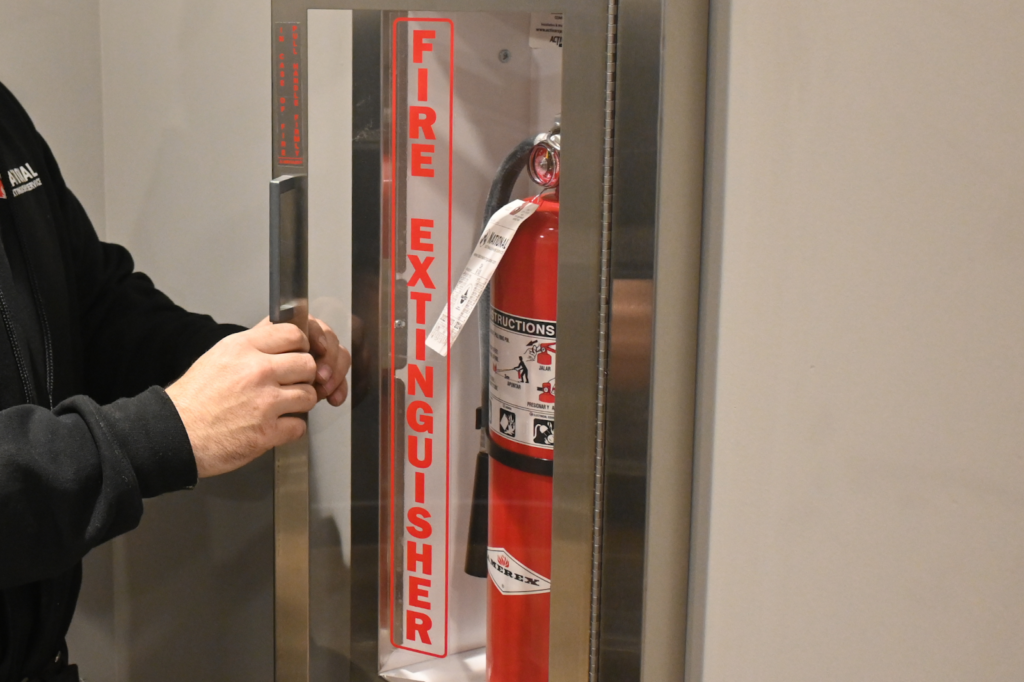
One of the most important safety issues in any professional kitchen is fire danger. Fire safety standards and reliable fire suppression systems are critical to maintaining a safe kitchen environment.
Open flames, high temperatures, and greasy vapors are produced during cooking. Fire risks rapidly increase if these are not properly managed.
Among the fundamental fire safety requirements are:
- Installing fire-rated ceiling and wall materials close to cooking areas
- Sufficient space between combustible objects and heat-producing machinery
- Fire extinguishers with ratings for electrical and grease fires
- Evacuation routes and emergency exits should be well signposted.
Professional kitchens require far tougher fire safety regulations than non-commercial cooking spaces, given their continuous operation and higher heat loads.
Cooking lines, exhaust systems, and emergency access are frequently the focus of fire safety assessments. One of the most frequent causes of operational shutdowns is non-compliance in these areas.
Kitchen Hood Systems and Ventilation Safety
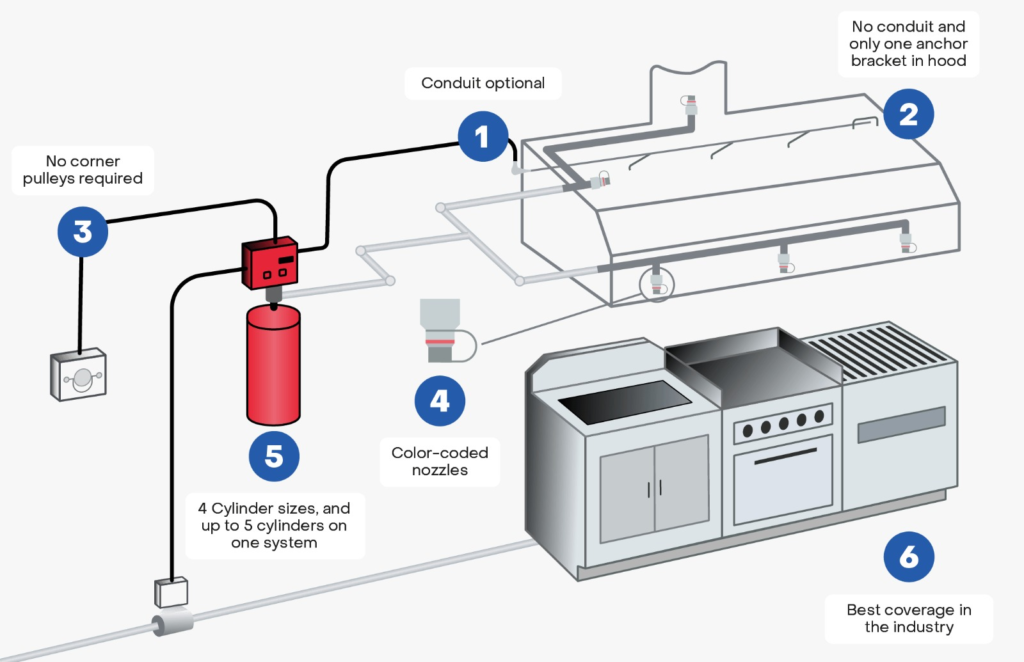
“The hood system illustrated above shows how grease extraction and fire suppression work together to reduce fire risk.”
To comply with commercial kitchen safety standards and ventilation guidelines, kitchen hood systems are essential.
A well-designed hood system eliminates:
- Steam and heat
- Fumes and smoke
- Grease-filled fumes
Grease builds up on surfaces and in ducting when ventilation is inadequate, greatly increasing the risk of a fire.
Requirements for safety-focused hood systems include:
- Appropriate hood size according to the weight of the cooking equipment
- Constant mechanical exhaust with sufficient airflow capacity
- Grease filters that are simple to remove and clean
- Grease-prevention ducting
- Integrated fire suppression systems in the hood assembly
From an operational standpoint, poorly built hood systems lead to higher temperatures, reduced employee comfort, and more kitchen maintenance problems. Under-engineered ventilation settings are more likely to fail inspections and present long-term safety issues than compliant systems.
Electrical and Equipment Safety Requirements
Another essential element of professional kitchen design is electrical safety.
Compared to residential areas, commercial kitchens use a lot more electricity. Ovens, dishwashers, refrigerators, and exhaust systems are examples of equipment that run continuously for long periods.
Important guidelines for electrical safety include:
- Circuits specifically designed for large machinery
- Appropriate insulation and earthing
- Electrical fixtures in the wash and prep areas that are waterproof
- Gas and electrical line emergency shut-off access
Additionally, equipment safety depends on:
- Installation stability on level surfaces
- Sufficient distance to dissipate heat
- Manufacturer-recommended clearances
When equipment is installed without considering access and airflow, or when it is overloaded, I frequently witness safety problems. Although these shortcuts may temporarily save space, they eventually raise the danger of accidents and breakdowns.
Food Safety and Hygiene Standards
Commercial kitchen safety goes beyond equipment and fire safety. Food safety and hygiene standards are equally important for compliance and customer well-being.
Expert kitchens need to avoid:
- Raw and prepared food cross-contamination
- Abuse of temperature during holding and storage
- Pest exposure and unhygienic environments
Typical standards for hygiene consist of:
- Separate preparation spaces for raw and prepared dishes
- Handwashing facilities are thoughtfully positioned throughout workflows.
- Cleanable, non-porous surfaces for every location that comes into contact with food
- Monitoring the temperature of both hot and cold storage
Professional kitchens are supposed to regularly document and follow food safety procedures, unlike unofficial food production areas.
Staff Safety and Operational Protocols
Without controlled operations, even the best-designed kitchen can become dangerous.
Generally, footwear regulations and slip-resistant floors are covered by staff safety requirements.
- Aisle widths that allow for mobility during peak service
- Safe methods for handling and storing knives
- Instruction on emergency response and equipment use
Experience has shown that kitchens that invest in employee training have higher productivity and fewer accidents. Safety procedures help teams respond calmly in emergencies and reduce confusion during periods of high service pressure.
Common Safety Violations and How to Avoid Them
Certain infractions recur in audits and inspections.
Among them are:
- Hood filters are blocked with grease.
- Fire extinguishers that are blocked or inaccessible
- Insufficient ventilation for the cooking load
- Electrical circuits that are overloaded
- Inadequate division of the clean and filthy zones
With proactive design, regular maintenance, and defined operational responsibilities, the majority of these problems can be avoided.
Understanding commercial kitchen safety standards as an operational system, rather than just a checklist, is the first step toward avoiding infractions and maintaining ongoing safety compliance.
Frequently Asked Questions
Are safety regulations for commercial kitchens required?
Indeed. Inspections are used to enforce safety regulations, which are necessary for licensing and ongoing business operations.
Are small kitchens subject to safety regulations?
Of course. Risk is not decreased by scale. Due to space constraints, smaller kitchens often require even more meticulous planning.
How frequently should hood systems be cleaned?
Regular cleaning is necessary to prevent grease buildup and fire risk; however, the frequency depends on usage.
After opening, can safety systems be added?
They can, but retrofitting is frequently more costly and disruptive than building with safety in mind from the beginning.
Who is in charge of upholding safety regulations?
Usually, the operator is in charge, with assistance from maintenance teams, equipment vendors, and design consultants.
Final Thoughts and Compliance Takeaways
Commercial kitchen safety standards cannot be circumvented. They provide the structure necessary for professional kitchens to operate effectively, maintain kitchen compliance, and ensure sustainable, lawful business practices.
Kitchens function better, employees work more confidently, and inspections become regular rather than stressful when safety is incorporated into layout planning, equipment selection, and day-to-day operations.
I usually advise addressing safety standards early in the design or renovation of a kitchen, particularly regarding hood and ventilation systems. When compliance is done correctly, people, property, and long-term corporate value are all protected.