
Table of Contents
- Why Understanding the Installation Process Matters
- What is the Commercial Kitchen Installation Process?
- Step One: Pre-Installation Planning and Site Readiness
- Step Two: Delivery, Positioning, and Equipment Placement
- Step Three: Utility Connections and System Integration
- Step Four: Ventilation, Fire Safety, and Compliance Checks
- Step Five: Testing, Commissioning, and Operational Validation
- Common Installation Challenges and How They Are Avoided
- Frequently Asked Questions
- Abstract-Style Keywords
- Final Thoughts and Installation Takeaways
Why Understanding the Installation Process Matters
It’s a common misconception that a commercial kitchen is ready for use as soon as the equipment arrives. However, this assumption often leads to misunderstandings.
Installing a commercial kitchen requires multiple steps. For everything to run safely and smoothly, each phase must be carefully planned and coordinated. Rushed or disorganized installation can cause problems during commissioning or later when the kitchen opens.
By understanding the installation process, kitchen operators can set clear expectations and see if the work is being done properly.
What is the Commercial Kitchen Installation Process?
The commercial kitchen installation process means putting approved designs, equipment plans, and utility layouts into action in a practical, step-by-step way.
Usually, this procedure consists of:
- Setting up the location for equipment delivery
- Equipment placement and repair in accordance with the layout
- Connecting drainage, water, gas, and electrical systems
- Combining fire safety and ventilation
- System testing in real-world scenarios
An installation is only successful if all systems work as intended.
Step One: Pre-Installation Planning and Site Readiness
The site needs to be prepared before any equipment is brought.
At this point, I search for:
- Civil and finishing work completed.
- Completed walls and levelled floors
- Availability of electrical loads
- Water and gas lines are in the proper places.
- Equipment-aligned drainage points
The majority of delays in the commercial kitchen installation process occur because this step is neglected. When equipment is delivered to an unprepared location, quality is compromised, and rework is required.
Step Two: Delivery, Positioning, and Equipment Placement
Equipment delivery and placement start as soon as the site is prepared.
This stage entails:
- Checking equipment against authorised specs
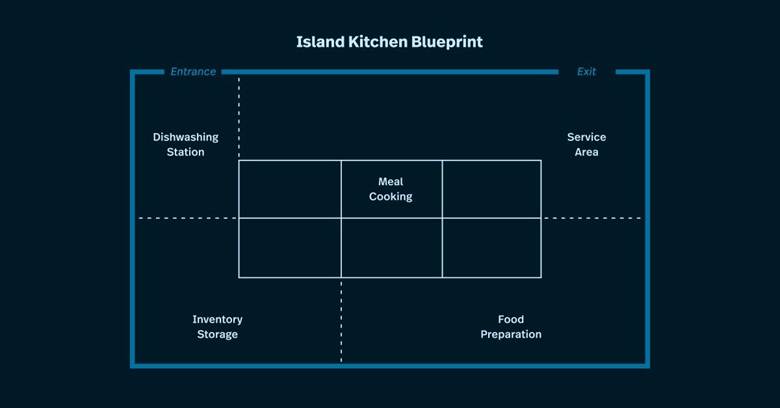
- Equipment placement according to layout drawings
- Making sure the right clearances are obtained for maintenance and operation
- securing equipment firmly
Placing equipment accurately matters. Even small changes can affect workflow, ventilation, or access for maintenance.
Step Three: Utility Connections and System Integration
Utilities are connected following placement.
This comprises:
- Electrical connections that are appropriately managed for the load
- Safety controls and gas hookups
- Connections for drainage and water supply
- Interaction of several systems
At this stage, teams need to work closely together. Layout, utilities, and equipment must fit together perfectly. Poor teamwork can cause last-minute changes or safety issues.
Step Four: Ventilation, Fire Safety, and Compliance Checks
Fire safety and ventilation are essential features. They are essential to the installation process.
Usually, this stage consists of:
- Installing hood systems that line up with kitchen appliances
- Linking the make-up and exhaust air systems
- Combining safety and fire suppression devices
- Confirming that extinguishers and emergency controls are accessible
Inspections tend to focus heavily on this step. Adding ventilation and safety systems early in the process helps prevent compliance issues later.
Step Five: Testing, Commissioning, and Operational Validation
The kitchen must be tested before the installation is finished.
Commissioning entails:
- Operating machinery while under load
- Verifying the effectiveness of ventilation
- Checking safety systems
- Verifying access and workflow
- Finding and fixing problems
This stage ensures the kitchen isn’t just finished on the surface, but also ready to work. If commissioning is skipped or rushed, equipment can fail early or cause extra stress during operation.
Common Installation Challenges and How They Are Avoided
Similar problems recur frequently in different projects.
Typical problems include:
- Delays in site readiness
- Mismatches in utility capacity
- Equipment that arrives out of order
- The mismatch of ventilation
- Unfinished testing
Careful planning and well-organized steps help avoid these problems. Having one team handle the whole job (a turnkey approach) is especially helpful.
Frequently Asked Questions
How much time does it take to establish a commercial kitchen?
Although installation schedules differ, correct sequencing is more crucial than speed.
Can we start installation before all of the equipment arrives?
Only if site preparation is finished and sequencing is meticulously planned.
Does commissioning actually need to be done?
Indeed. It attests to the systems’ functionality in actual operational environments.
During installation, who is responsible for coordination?
With a single execution partner, accountability is consolidated in a turnkey approach.
What occurs if problems are discovered when commissioning?
To prevent interruptions to operations, they are fixed before handover.
Final Thoughts and Installation Takeaways
Installing a commercial kitchen is more than just assembling equipment, it’s a process that needs planning and know-how.
When installation is planned and done well, kitchens open smoothly, inspections go as expected, and staff can start work confidently. But if the process is rushed, problems show up at the worst times.
If you’re planning a kitchen renovation, it’s worth learning the basics of installation. Good techniques set you up for lasting success and protect your investment.