Table of Contents
What Is a Commercial Kitchen Exhaust System?
Why Exhaust Systems Are Critical in Commercial Kitchens
Main Components of an Exhaust System
How a Commercial Kitchen Exhaust System Works
Airflow and Pressure Management
Types of Exhaust Systems
Installation and Design Considerations
Maintenance and Performance Factors
Common Issues in Exhaust Systems
Why Fire Safety Is Critical in Commercial Kitchens
What Are Commercial Kitchen Fire Safety Systems?
Types of Fire Safety Systems in Commercial Kitchens
How Fire Suppression Systems Work
Key Components of Fire Safety Systems
Compliance and Regulatory Requirements
Maintenance and Inspection Requirements
Common Fire Safety Risks in Kitchens
Best Practices for Fire Safety
Frequently Asked Questions
Final Thoughts on Exhaust and Fire Systems
What Is a Commercial Kitchen Exhaust System?
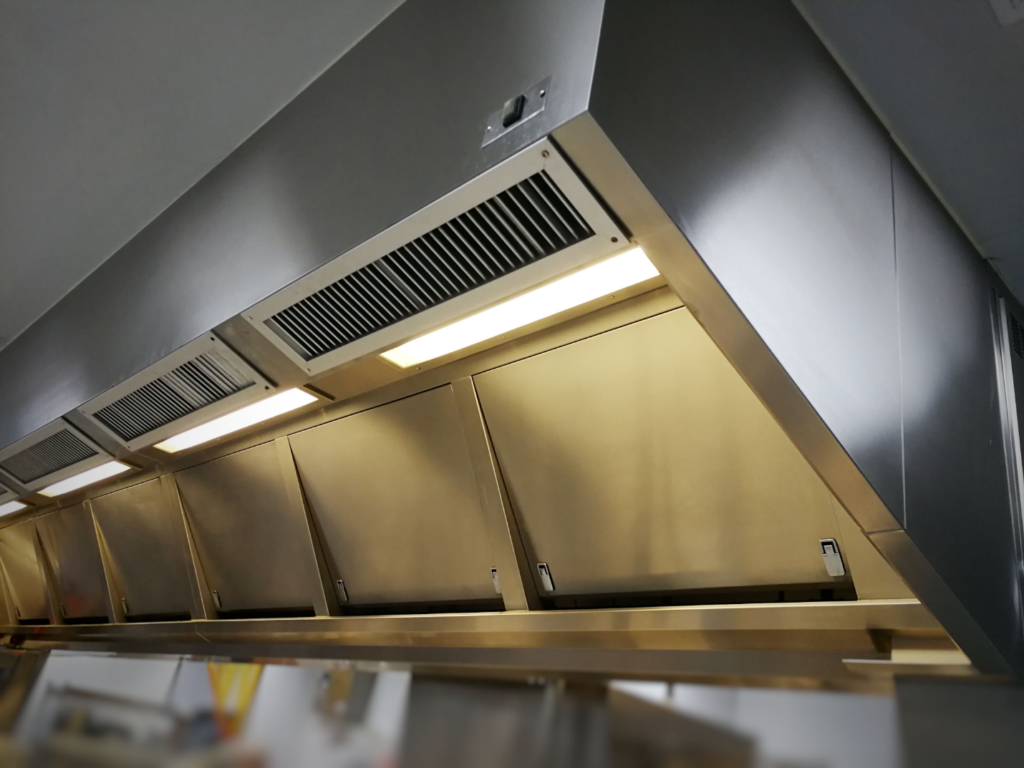
Heat, smoke, grease-laden fumes, and airborne pollutants produced during cooking are all intended to be eliminated by a commercial kitchen exhaust system. It is one of the most important systems in a professional kitchen since it keeps the space safe, breathable, and functional.
Examining how air is collected, filtered, and released from the kitchen in a regulated manner is essential to comprehending a commercial kitchen exhaust system. During operations, this system keeps the temperature and air quality balanced.
Why Exhaust Systems Are Critical in Commercial Kitchens
Because industrial kitchens produce a lot of heat and airborne pollutants, exhaust systems are crucial. These components build up quickly in the absence of adequate ventilation.
They assist with:
- Eliminating airborne smoke and grease particles
- Managing the kitchen’s temperature
- Enhancing the quality of the air for employees
- Lowering the risk of fire brought on by grease accumulation
Performance and safety are directly impacted by these functions.
An uncomfortable and sometimes dangerous working environment results from ineffective removal of heat and pollutants. This may eventually have an impact on equipment performance as well as employee productivity. Commercial kitchen exhaust systems that are operating properly guarantee that kitchens run smoothly even during busy times.
Main Components of an Exhaust System
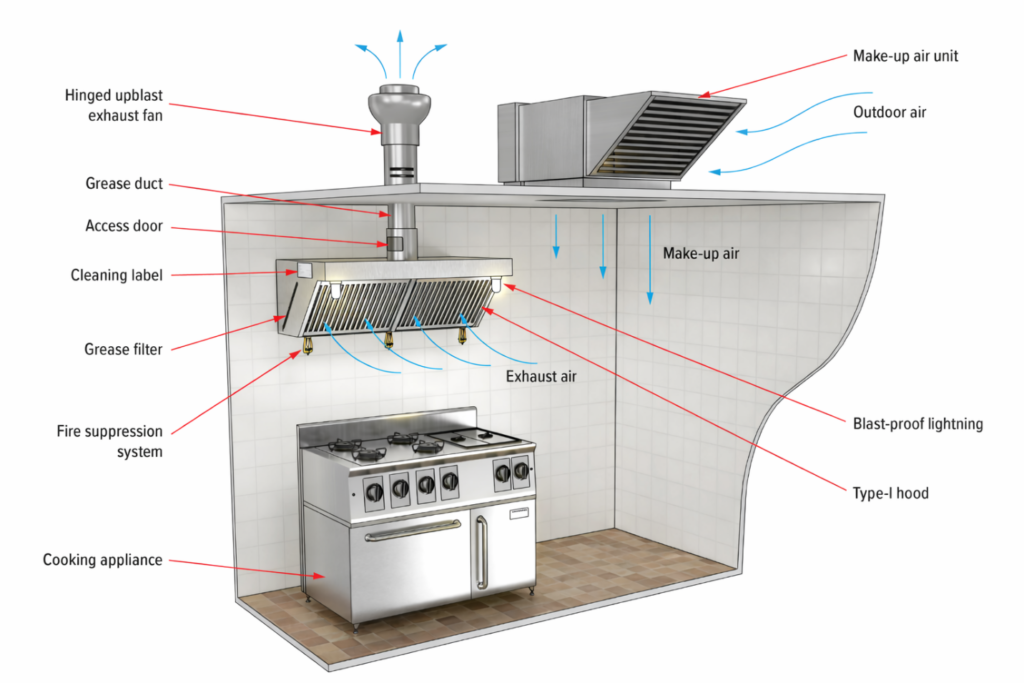
A whole exhaust system is made up of several parts that cooperate to control airflow and eliminate impurities.
Important elements consist of:
• A canopy or exhaust hood
• Filters for grease
• The ducting system
• A blower or exhaust fan
• A make-up or fresh air system
Every part of the system serves a certain purpose.
The exhaust fan forces the air out of the building, ducts channel it, filters catch grease particles, and the hood collects heat and pollutants at the source. To keep the kitchen’s pressure balanced, the make-up air system replenishes the withdrawn air.
How does the exhaust system of a Commercial Kitchen Works?
Controlled airflow and effective pressure management are the cornerstones of an exhaust system’s operation.
The procedure consists of:
• When cooking appliances are used, they produce heat and smoke.
• These pollutants are then captured by the hood.
• The hood contains grease filters that separate the oil particles.
• Contaminated air is removed using ducts.
• Outside air is expelled by exhaust fans.
During culinary operations, this cycle never stops.
Contaminants are eliminated before they spread throughout the kitchen thanks to a well-designed system. In addition to preventing disturbances brought on by excessive heat or smoke accumulation, efficient ventilation also aids in maintaining constant cooking conditions.
Airflow and Pressure Management
One of the most crucial elements of exhaust system performance is airflow.
Important factors include:
• Keeping the kitchen’s air balance in check
• Preventing airflow disruption caused by negative pressure
• Making sure there is enough fresh air available
• Encouraging reliable exhaust performance
The system operates effectively without interfering with cooking operations thanks to balanced airflow.
Negative pressure in the kitchen can impede burner operation and lower ventilation effectiveness. The exhaust system runs reliably and enables general kitchen functionality when airflow is properly managed.
Types of Exhaust Systems
Depending on their design and level of cooking, different kitchens need different kinds of exhaust systems.
Typical kinds include:
- Exhaust systems installed on walls
- Exhaust systems on islands
- Exhaust systems without vents
- Exhaust systems with low closeness
Every kind is made to meet particular operational requirements.
For instance, island systems are utilised in open kitchens, whereas wall-mounted systems are appropriate for conventional cooking lines. Although they are typically appropriate for milder culinary applications, ventless systems are utilised in situations where ducting is not practical.
Installation and Design Considerations
An exhaust system’s performance is greatly impacted by proper installation.
Among the crucial elements are:
• The hood and duct system should be sized correctly.
• Effective duct routing for ventilation
• Choosing the right fan capacity
• Adherence to ventilation and safety regulations
The effectiveness of the system is determined by each of these components.
Poor ventilation, higher energy use, and operational inefficiencies might result from improper installation. The exhaust operates dependably in all circumstances thanks to a well-designed system.
Maintenance and Performance Factors
For exhaust systems to continue operating effectively, regular maintenance is necessary.
Important maintenance duties consist of:
- Grease filter cleaning on a regular basis
- Examining channels for accumulation
- Evaluating the performance of fans
- Keeping an eye on the consistency of airflow
These activities lower the risk of fire and preserve system efficiency.
Grease buildup, less ventilation, and higher operating expenses might result from neglecting maintenance. Consistent airflow, increased safety, and a longer equipment lifespan are all demonstrated by a well-maintained commercial kitchen exhaust system.
Common Issues in Exhaust Systems
Inadequate system design or upkeep causes problems in many kitchens.
Typical issues consist of:
- Insufficient capacity for airflow
- Grease accumulation in ducts
- Inadequate duct design
- Unbalanced air pressure
These problems might lead to safety hazards and lower system efficiency.
Early resolution of these issues guarantees that the system will continue to function well and facilitate efficient kitchen operations.
Why Fire Safety Is Critical in Commercial Kitchens
Commercial kitchens work in hazardous conditions with heat, open flames, and grease all the time. If these elements are not well controlled, the likelihood of fire dangers is greatly increased.
In a grease-heavy atmosphere, even a tiny ignition source can quickly increase; thus, understanding commercial kitchen fire safety systems is crucial. If the right precautions are not taken, kitchen fires can spread quickly through duct systems.
Effective fire safety systems reduce hazards, safeguard employees, and stop equipment and property damage.
What Are Commercial Kitchen Fire Safety Systems?
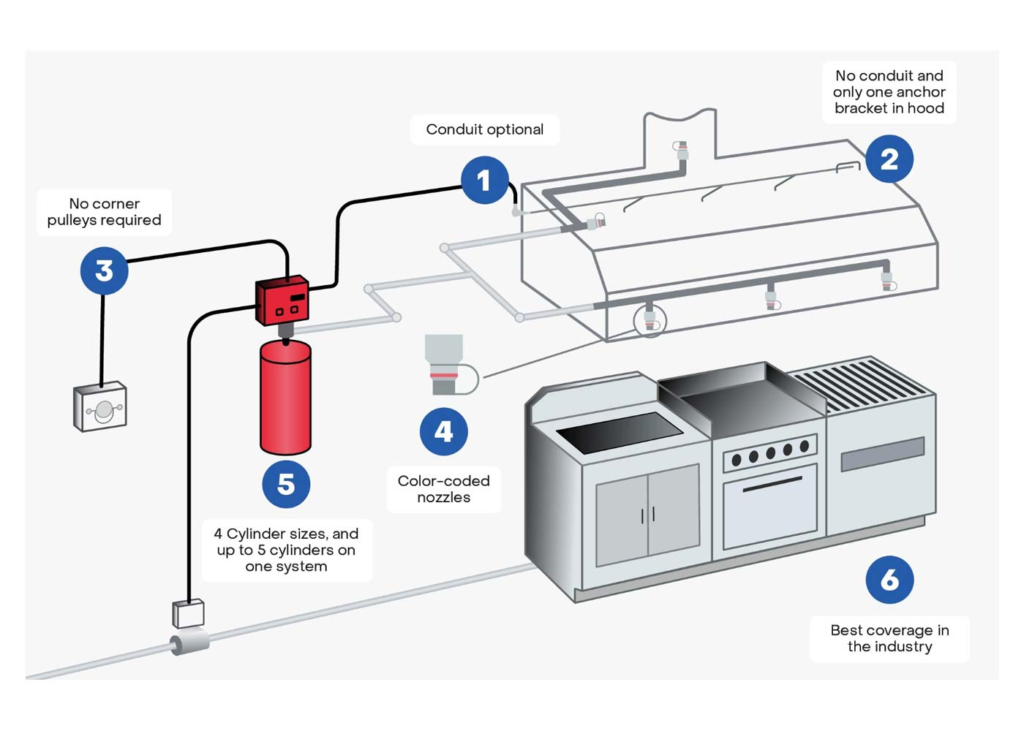
Commercial kitchen fire safety systems are specialised devices made to identify, contain, and put out flames before they get out of control.
The main components are fire hazard detection, flame suppression, staff alarm systems, and safety features built directly into kitchen equipment. No single component is sufficient on its own. The system works because all parts function together.
When the design is right, fires are caught early and suppressed before they escalate. That limits damage to both the kitchen and the people working in it.
Types of Fire Safety Systems in Commercial Kitchens
Which systems a kitchen needs comes down to its layout and the level of risk involved. Wet chemical suppression systems, grease fire extinguishers, automatic gas and electricity shut-off systems, and fire detection and alarm systems are the standard options. Each one is matched to a specific hazard, not applied as a blanket solution.
Wet chemical systems are the go-to in most commercial kitchens because grease fires are the most common threat. Automatic shut-off systems cut the fuel source as soon as an emergency is detected. Extinguishers handle what needs immediate manual intervention.
How Fire Suppression Systems Work
When a fire is detected, fire suppression systems are made to automatically turn on.
The procedure consists of:
• The mechanism is activated by heat or flame detection.
• Over the cooking area, suppression agents are released.
• Flames are managed and put out.
• Gas and other fuel sources are automatically turned off.
This procedure stops a fire from spreading in a matter of seconds.
In order to suppress fires at their source, the device is usually installed inside kitchen hoods. In order to ensure safety and prevent significant damage, prompt action is essential.
Key Components of Fire Safety Systems
A complete fire safety system has five core components: detection sensors, control panels, suppression nozzles, chemical agents, and manual activation systems.
None of these work in isolation. Each depends on the others functioning correctly for the system to respond effectively when it matters.
Nozzles disperse suppression agents, control panels oversee system reaction, and detection sensors detect fire conditions. Employees can engage manual systems if necessary.
Compliance and Regulatory Requirements
Strict standards are in place to ensure safety and risk control in commercial kitchens when it comes to fire safety.
Important prerequisites consist of:
The core requirements are straightforward: certified fire suppression systems, compliance with local fire safety codes, regular testing and inspection, and the correct certification and documentation in place.
Non-compliance is not a grey area. It can mean fines, a forced shutdown, or worse, a fire that a properly maintained system would have caught early. Getting the regulations right covers both safety and legal standing in one go.
Maintenance and Inspection Requirements
A fire safety system that is not maintained regularly may not work when needed. The core tasks are not complicated: inspect suppression systems, check sensors and nozzles, test alarms, and swap out expired suppression agents before they become a liability.
Skip these long enough, and the system becomes unreliable. Regular inspections are the simplest way to stay ahead of failures before they surface at the wrong moment.
Common Fire Safety Risks in Kitchens
Due to operational settings, commercial kitchens are susceptible to a number of frequent fire dangers.
Important dangers consist of:
• Grease accumulation in filters and ducts
• Cooking appliances overheating
• Handling open flames improperly
• Inadequate electrical connections
Fire occurrences are more likely as a result of these factors.
These risks can be greatly decreased by following safety procedures, maintaining equipment, and cleaning it properly.
Best Practices for Fire Safety
Adopting recommended practices lowers the risk of fire and increases overall kitchen safety.
Among the best practices are:
- Frequent hood and duct system cleaning
- Educating employees on fire safety protocols
- Installing fire safety systems that have been certified
- Regularly carrying out safety audits.
These procedures provide a proactive approach to security.
Risk reduction and uninterrupted operations are guaranteed by a well-maintained and appropriately managed system.
Frequently Asked Questions
What is the purpose of a commercial kitchen exhaust system?
It eliminates pollutants, heat, smoke, and grease from the kitchen.
Why does exhaust system airflow matter?
It guarantees the effective elimination of impurities and preserves the equilibrium of the kitchen.
Are commercial kitchens required to have exhaust systems?
Indeed. They are necessary for both regulatory compliance and safety.
How frequently should exhaust systems be cleaned?
Cleaning should be done on a regular basis, depending on consumption.
Can the performance of a kitchen be impacted by bad exhaust design?
Indeed. Heat accumulation, safety hazards, and decreased efficiency might result from it.
Which fire protection system is most prevalent in commercial kitchens?
The most popular type of fire suppression is wet chemical.
Do fire safety measures have to be installed?
Indeed. The majority of commercial kitchens are subject to fire safety standards.
How frequently should fire systems be examined?
According to local laws, they ought to undergo routine inspections.
Can fire systems operate on their own?
Indeed. When a fire is detected, the majority of systems are built to activate automatically.
What makes grease accumulation hazardous?
It greatly raises the risk of a fire and is extremely combustible.
Final Thoughts on Exhaust and Fire Systems
Designing safe and effective kitchens requires an understanding of how commercial kitchen exhaust systems operate.
A well-designed system guarantees adherence to safety regulations, enhances equipment performance, and improves air quality. Additionally, it lessens operational disturbances and improves working conditions.
In every industrial kitchen setting, long-term performance and dependability are ensured by purchasing the appropriate exhaust system and carefully maintaining it.
Ensuring a safe and compliant cooking environment requires an understanding of commercial kitchen fire safety systems.
These systems are essential for averting fires, safeguarding employees, and preserving business continuity.
A safe and dependable kitchen environment may be created by investing in the appropriate system, making sure it is installed correctly, and performing routine maintenance. It is not optional to practice fire safety. It is an essential component of every commercial kitchen