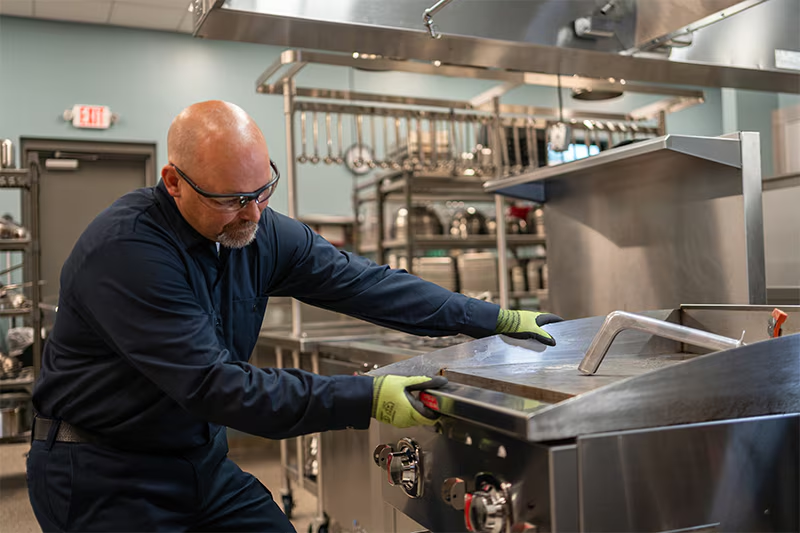
Table of Contents
- Why Maintenance Is a Strategic Discipline
- What is Commercial Kitchen Equipment Maintenance?
- Daily Maintenance Practices That Protect Equipment
- Weekly and Monthly Preventive Maintenance Tasks
- Ventilation and Refrigeration Care
- When to Call for Professional Servicing
- Building a Preventive Maintenance Culture
- Frequently Asked Questions
- Final Thoughts on Long-Term Equipment Reliability
Why Maintenance Is a Strategic Discipline
Many operators view maintenance as a response to malfunctions. Experience has shown that this strategy shortens equipment lifespan, increases repair costs, and increases downtime.
The duty of maintenance is not reactive. It is an organised discipline that safeguards operational stability, safety, and performance. Teams may greatly increase asset life and reduce emergency repairs by adhering to the correct maintenance tips for commercial kitchen equipment.
What is Commercial Kitchen Equipment Maintenance?
I discuss a systematic approach to cleaning, inspection, servicing, and calibration when I talk about commercial kitchen equipment maintenance tips.
This comprises:
· Routines for daily cleaning
· Regular technical examinations
· Replacing worn-out parts
· Keeping an eye on the consistency of performance
Maintenance ensures equipment operates at its rated capacity without unnecessary strain. Additionally, it safeguards energy efficiency and compliance.
Daily Maintenance Practices That Protect Equipment
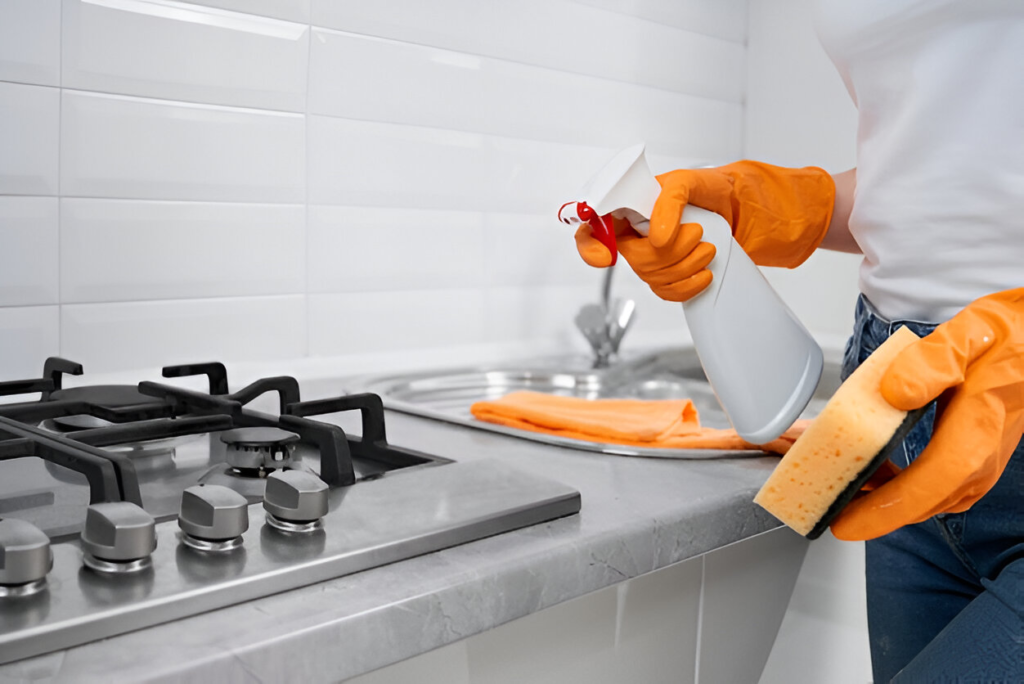
Long-term dependability is most significantly impacted by daily discipline.
Important daily routines consist of:
- Grease accumulation removal and cooking surface cleaning
- Cleaning knobs and control panels
- Examining the seals on refrigerator doors
- Grease trap cleaning and emptying
- Examining the apparent electrical and gas connections
These minor steps stop contamination and wear over time. Equipment damage is accelerated by heat stress and residue accumulation when daily cleaning is neglected.
Weekly and Monthly Preventive Maintenance Tasks
In addition to daily activities, organized inspection schedules are crucial.
Weekly inspections must to consist of:
- Examining the ventilation filters
- Examining burner flames for anomalies
- Condenser coil cleaning
- Checking the drainage flow
Monthly assignments could consist of:
- Securing loose fittings
- Examining electrical wiring
- Calibration test for temperature
- Examining the water intake valves
This is the point at which commercial kitchen equipment maintenance tips become essential. Frequent inspection lowers the risk of unexpected malfunctions during periods of high demand.
The goal of preventive maintenance is to completely avert failures rather than just responding to them.
Ventilation and Refrigeration Care
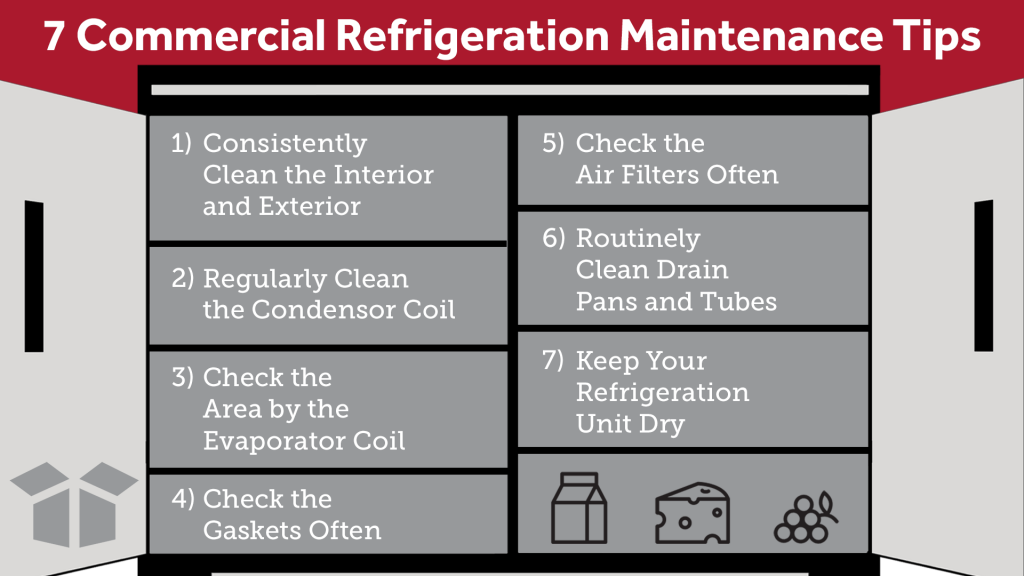
Systems for refrigeration and ventilation run constantly and need extra care.
Included in ventilation care are:
- Hood filters should be cleaned frequently.
- Examining the connections in the ducts
- Keeping an eye on airflow performance
The following are included in refrigeration maintenance:
- Condenser coil cleaning
- Verifying the correctness of the thermostat
- Keeping an eye on odd compressor noise
These systems use more energy and work less consistently when they are not properly maintained. I’ve found that ignoring refrigeration and ventilation causes equipment to deteriorate more quickly overall.
When to Call for Professional Servicing
Internal maintenance is not the best option for every maintenance task.
It is advised to hire a professional when:
- Equipment exhibits persistent issues.
- Variations in gas pressure
- Electrical circuits frequently trip
- Temperature fluctuations continue.
- Performance of ventilation drastically declines
Prompt professional assistance stops small problems from becoming more serious and requiring costly repairs.
Building a Preventive Maintenance Culture
When maintenance is integrated into the operational culture, it performs optimally.
This comprises:
- Teaching employees how to use equipment correctly
- Keeping track of service logs
- Planning inspections ahead of time
- Examining maintenance performance every three months
A robust maintenance culture promotes operational stability and safeguards equipment investment.
The goal of adhering to regular maintenance tips for commercial kitchen equipment is not to save money. It’s about managing it.
Frequently Asked Questions
How frequently should equipment in commercial kitchens be serviced?
Scheduled preventative maintenance is crucial, albeit it depends on how much is used.
Can the lifespan of equipment be increased by routine cleaning?
Indeed. Wear and heat stress are greatly reduced by daily cleaning.
Does preventive maintenance actually need to be done?
Indeed. Both breakdowns and long-term repair costs are decreased.
Should all maintenance be done by staff?
Simple cleaning can be done in-house. Professionals should do technical servicing.
Does energy efficiency change with maintenance?
Yes, equipment that is clean and calibrated uses less energy.
Final Thoughts on Long-Term Equipment Reliability
Brands alone do not indicate the reliability of equipment. Discipline determines it.
Regular maintenance of commercial kitchen equipment minimizes unscheduled downtime, guarantees safety, and preserves performance. Kitchens can function efficiently under pressure without frequent repair pauses thanks to preventive care.
Treat maintenance as a primary operational strategy rather than a secondary chore if you are in charge of overseeing or organizing a commercial kitchen. Your daily actions, not just when something fails, determine your long-term performance.