Commercial Kitchen Contractor in India
Commercial Kitchen Contractor in India
Everything a hotel, restaurant, or institutional buyer needs to decide, budget, approve, and verify before a single piece of stainless steel enters the site — from scope of work to final handover.
A commercial kitchen contractor is the single point of responsibility that turns a blank shell — or a kitchen due for renovation — into a certified, operational cooking facility. In India, that responsibility spans design coordination, equipment procurement, civil and MEP integration, statutory compliance, and the handover documentation that lets a hotel or restaurant actually open. This page defines that role precisely, explains how Jacio Indicius executes it end to end, and answers the questions a buyer in Jaipur, Delhi NCR, Mumbai, Bengaluru, or Hyderabad typically has before requesting a quote.
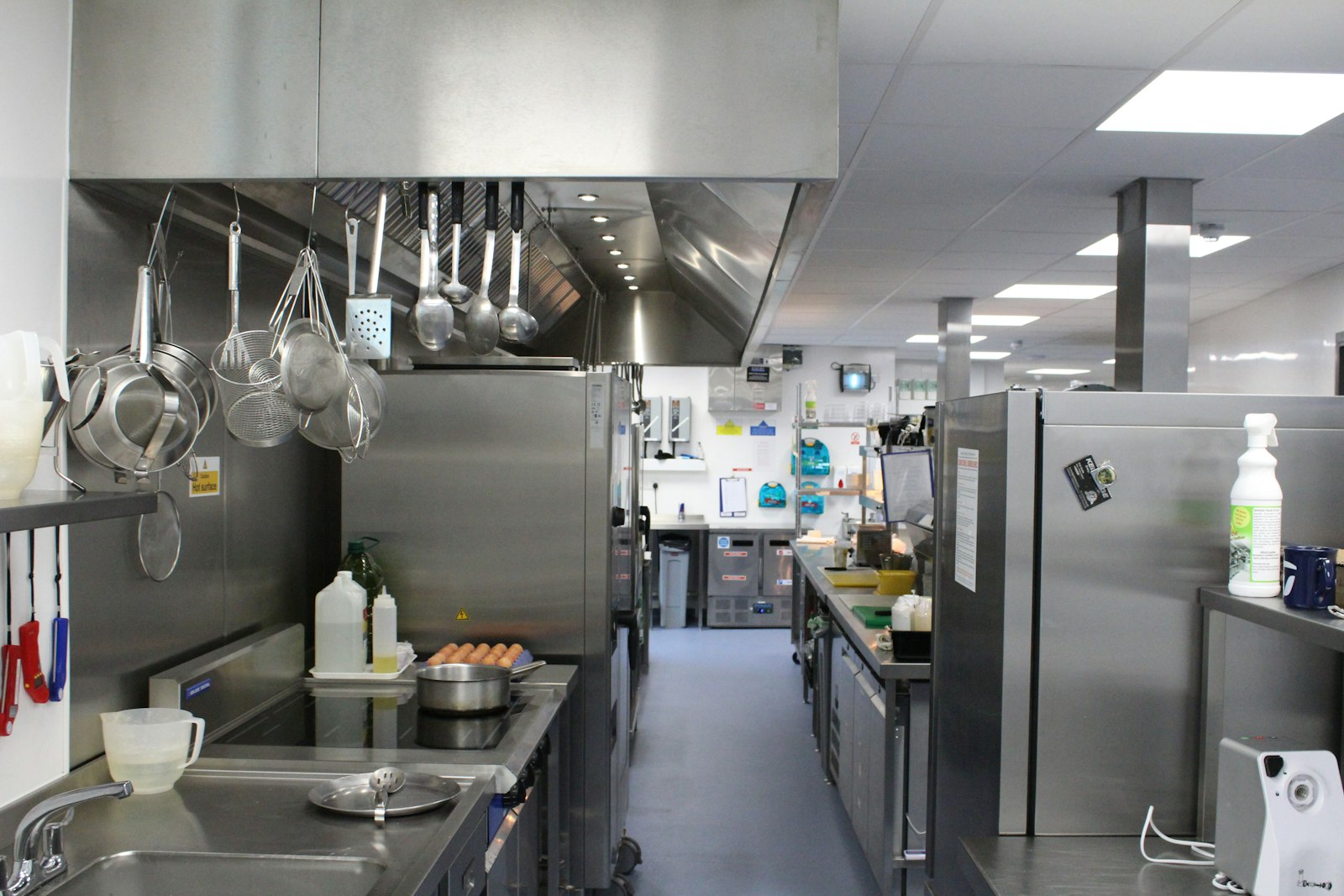
What is a commercial kitchen contractor?
A commercial kitchen contractor is a single accountable entity that designs, supplies, installs, and commissions a complete commercial kitchen — equipment, stainless steel fabrication, ventilation, and MEP integration — under one contract, one warranty, and one point of liability.
The distinction that matters is single-point responsibility. A hotel developer could instead hire a kitchen consultant to draw the layout, a civil contractor to build the shell, an equipment dealer to supply the cooking line, an HVAC vendor for exhaust, and an electrician for the load — five separate contracts, five separate warranties, and no single party accountable when a combi oven's steam output doesn't match the exhaust hood's capacity. A commercial kitchen contractor collapses that into one scope of work, one commissioning sign-off, and one defect liability period.
This is different from a general contractor who happens to build kitchens as part of a larger fit-out, and different again from an equipment dealer who supplies a cooking range but has no obligation for how it integrates with the exhaust system, the gas manifold, or the drainage. A genuine commercial kitchen contractor carries technical ownership of the entire cooking-to-exhaust chain — a distinction we cover in depth in turnkey kitchen versus multiple vendors.
The scope also carries a liability boundary that a loose collection of vendors cannot offer. When a single contractor signs off commissioning, the defect liability period that follows covers the interaction between systems — not just each appliance in isolation. If a griddle's heat output stresses a hood that was sized for a lighter cooking line, that is the contractor's problem to resolve, not a dispute between three separate suppliers over whose specification was wrong. Buyers evaluating proposals should treat this liability boundary as the single most important line in any contract, ahead of the equipment brand list. For a complete line-by-line breakdown of everything that scope should cover, see what a commercial kitchen contractor does.
What does a commercial kitchen contractor deliver?
A commercial kitchen contractor delivers layout and workflow design, equipment specification and supply, stainless steel fabrication, MEP coordination, statutory compliance documentation, installation, commissioning, staff training, and a defect liability period — as one integrated scope, not separate line items.
Broken into the disciplines a buyer actually has to evaluate, the scope typically covers:
- Design and zoning — cold storage, prep, cooking line, wash-up, and service pass laid out for workflow, not just floor area, following the core principles of commercial kitchen design.
- Equipment specification — matching cooking-range types, refrigeration capacity, and warewashing throughput to projected covers per hour, sourced against recognised equipment standards rather than lowest-price catalogues.
- Stainless steel fabrication — worktables, sinks, and shelving built to SS 304 or SS 202 grade in 1.2 mm gauge, specified to the duty cycle of the section it serves.
- MEP coordination — electrical load, gas piping, drainage, and make-up air planned jointly with the project's MEP contractor and main civil contractor, not bolted on afterward.
- Compliance documentation — the paperwork FSSAI, fire NOC, and municipal inspectors actually ask for, aligned with Bureau of Indian Standards and National Building Code of India provisions.
- Installation and commissioning — physical placement, utility connection, load testing, and the sign-off that converts installed equipment into an operating kitchen.
Every one of these is a discipline in its own right; integrating equipment in a turnkey kitchen is what separates a contractor from a supplier who simply delivers boxes to site.
Reputable equipment and installation practice also draws on international reference standards even within an Indian regulatory context — NSF International certification on food-contact surfaces, NFPA guidance on kitchen fire suppression systems, and ASHRAE recommendations on kitchen ventilation rates all inform how a contractor specifies equipment and ductwork, even where Indian codes do not mandate them directly. A contractor who references these standards by name, rather than a vague "industry best practice," is one whose specifications can actually be audited.
How does Jacio Indicius execute a commercial kitchen project?
Jacio Indicius executes each project through five sequential stages — consultation and design, BOQ and procurement, civil and MEP coordination, installation and commissioning, and handover with training — with a named project manager accountable for every stage.
The sequence mirrors the complete turnkey commercial kitchen execution process we follow on every engagement, adapted to the client's timeline and site constraints:
- Consultation and design — site audit, covers-per-hour target, menu-driven equipment list, and a layout that satisfies zoning and workflow before a single quotation is issued.
- BOQ and procurement — a line-itemised bill of quantities against which equipment is sourced from authorised, warranty-backed brands including Rational, Hoshizaki, Winterhalter, Meiko, and Robot Coupe, matched to project budget rather than defaulted to a single price tier.
- Civil and MEP coordination — direct coordination with the site's main civil contractor and MEP contractor so electrical load, gas piping, drainage, and exhaust ductwork are built to the equipment's actual specification, resolving the coordination challenges that derail most multi-vendor kitchen projects.
- Installation and commissioning — physical installation following a documented step-by-step installation process, followed by formal commissioning — load testing every appliance under real operating conditions before it is signed off.
- Handover and training — a structured handover checklist, staff walkthroughs on equipment operation, and the start of the defect liability period.
A single project manager owns all five stages, which is what keeps the common risks in commercial kitchen execution — mismatched specifications, missed inspection windows, uncoordinated trades — from becoming the client's problem to solve mid-project.
Which sectors does a commercial kitchen contractor serve?
A commercial kitchen contractor serves hotels, standalone restaurants and QSR chains, cloud kitchens, institutional and corporate catering, healthcare facilities, and hospitality groups — each with a distinct covers-per-hour profile and compliance requirement.
The stakeholders on the buyer's side also shift by sector — an executive chef and F&B director typically drive equipment specification in hotels and restaurants, while a facility manager or project manager leads on institutional and corporate accounts, and a kitchen consultant is sometimes retained independently on large multi-property rollouts to review the contractor's design before sign-off. Jacio Indicius has delivered across all six categories; the executed commercial kitchen projects and hospitality clients pages document the range, spanning engagements based out of Jaipur, Rajasthan through to properties in Delhi NCR, Mumbai, Bengaluru, and Hyderabad.
How much does a commercial kitchen contractor charge in India?
Commercial kitchen contracting in India typically runs ₹1,800–₹4,500 per square foot depending on equipment tier and kitchen complexity, priced either as a lump-sum turnkey figure or an itemised BOQ — with imported equipment, higher covers-per-hour, and complex MEP integration pushing costs to the upper end.
| Kitchen tier | Typical range (per sq ft) | Where it applies |
|---|---|---|
| Standard / QSR | ₹1,800 – ₹2,500 | Fixed-menu, high-turnover kitchens with domestic equipment |
| Mid-tier restaurant / hotel outlet | ₹2,500 – ₹3,500 | Mixed domestic and imported equipment, moderate MEP complexity |
| Premium hotel / large-format | ₹3,500 – ₹4,500+ | Imported combi ovens, extensive ventilation, multi-section kitchens |
The number that matters more than the per-square-foot average is the bill of quantities behind it — a proper BOQ itemises every appliance, every metre of ducting, and every stainless steel fabrication piece, which is the only way to compare two contractors' quotes on equal terms. A lump-sum figure without a BOQ underneath it is not a quote a buyer can meaningfully evaluate. We break this down further in how to plan a commercial kitchen project effectively.
Four factors move a project's final number more than any other: whether equipment is sourced domestically or imported, the fabrication grade specified for worktables and sinks (SS 304 versus the lighter SS 202), the covers-per-hour target the kitchen is sized against, and how much civil and MEP rework the existing shell requires before equipment can even be positioned. A retrofit inside an existing hotel basement with limited exhaust risers will almost always cost more per square foot than a greenfield kitchen designed around the equipment from day one. Comparing quotes side by side is easier with a fixed evaluation framework — our 14-point checklist for choosing a commercial kitchen contractor covers exactly what to check before signing.
How long does a commercial kitchen project take?
A commercial kitchen project typically takes 8 to 20 weeks from signed BOQ to handover — 8–10 weeks for a standard QSR-format kitchen, and 16–20 weeks for a large hotel kitchen with imported equipment and complex ventilation.
The variables that move a project from the short end of that range to the long end are equipment lead time — imported combi ovens and specialised refrigeration can carry 6–10 week manufacturing and shipping windows — and how early MEP coordination starts relative to civil works. A project where electrical load and gas piping are planned alongside the civil shell, rather than retrofitted after it is built, consistently lands closer to the shorter end. The full breakdown by stage is covered in typical timeline for a commercial kitchen project.
What does a commercial kitchen contractor provide after handover?
After handover, a commercial kitchen contractor provides a defect liability period, equipment warranty coordination, staff operating training, and — where contracted — an annual maintenance contract covering scheduled servicing and spare parts availability.
Handover is not the end of the relationship; it is the start of the defect liability period, typically 6–12 months, during which the contractor remains responsible for resolving installation-related faults at no additional cost. Equipment warranty is separate and brand-specific, coordinated through the contractor rather than left for the client to chase directly with each manufacturer. Where an AMC is in place, scheduled preventive maintenance and spare-parts stocking reduce the unplanned downtime that a busy kitchen cannot absorb — the same logic behind routine equipment maintenance generally. Our commercial kitchen contracting services page details what's included in each support tier.
Frequently asked questions
Is a commercial kitchen contractor the same as an equipment supplier?
No. An equipment supplier sells and delivers appliances. A commercial kitchen contractor holds design, procurement, installation, MEP coordination, and commissioning responsibility for the whole kitchen — the equipment is one part of a larger scope, not the entire contract.
Do I need a separate kitchen consultant if I hire a contractor?
Not necessarily. Most commercial kitchen contractors, including Jacio Indicius, provide design and zoning as part of the contracted scope. A separate consultant is more common on very large or multi-property projects where an independent design review is specifically required.
What licences does a commercial kitchen need before it can operate in India?
At minimum, an FSSAI licence, a fire NOC, and a local trade licence. Depending on the state and kitchen size, additional approvals covering effluent discharge and LPG or PNG storage may also apply.
Can a commercial kitchen contractor work with equipment I've already purchased?
Yes, though it affects warranty and liability terms. A contractor can integrate client-supplied equipment into the design and installation scope, but warranty on that equipment remains with its original point of sale rather than the contractor.
Does Jacio Indicius work outside Jaipur and Rajasthan?
Yes. While Jacio Indicius is based in Jaipur, project delivery extends across Delhi NCR, Mumbai, Bengaluru, Hyderabad, and other markets across India, coordinated through the same single-point-of-responsibility model used locally.
Ready to scope your commercial kitchen project?
Share your covers-per-hour target, site plan, and timeline — we'll come back with a BOQ-backed quote, not a per-square-foot guess.